Winter Car Care in Boise: Protecting Your Vehicle From Salt and Ice
Essential winter car care strategies for Boise and Treasure Valley drivers. Learn how to protect your paint, undercarriage, and interior from salt, ice, and cold weather damage.
What Boise Winters Do to Your Vehicle
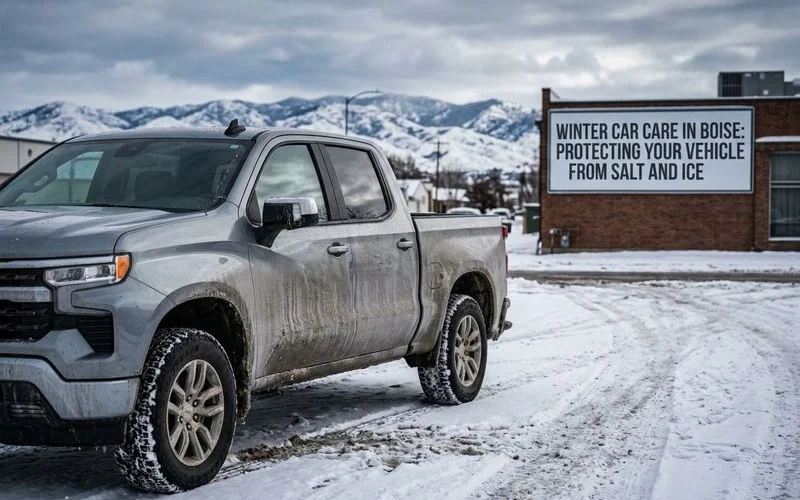
You know that grey, sticky crust that coats your car after a quick drive down I-84 in January? It is not just dirt. That is a chemical cocktail designed to keep the roads safe, but it wreaks havoc on your vehicle’s clear coat and undercarriage.
Our team sees the results of this exposure every spring. The Treasure Valley presents a unique challenge because we do not just get cold and stay cold. We experience frequent freeze-thaw cycles where temperatures drop into the 20s at night and rise above freezing during the day.
This rapid expansion and contraction allows moisture to seep deeper into microscopic paint fissures. According to local meteorological data, Boise averages over 100 of these freeze-thaw cycles annually. That is significantly higher than many Midwest cities, creating a relentless stress test for your vehicle’s exterior components.
Protecting your investment with proper exterior detailing requires understanding exactly what the Ada County Highway District (ACHD) and Idaho Transportation Department (ITD) put on the roads.
Road Salt and De-Icer Damage
While many regions use simple rock salt, Idaho relies heavily on liquid magnesium chloride. This chemical is effective at lower temperatures than sodium chloride, but it comes with a significant downside for vehicle owners.
The Magnesium Chloride Threat
Magnesium chloride is hygroscopic, meaning it actively attracts moisture from the air. We often explain to clients that this chemical can remain in a liquid, corrosive state on your vehicle even when the roads are dry.
The critical humidity point for magnesium chloride is roughly 32%. This means if the air humidity is above 32%—which is common in a Boise winter—the chemical on your car stays wet and active. It re-activates every time the humidity rises or you pull into a warm garage.
The following table breaks down the specific risks:
| Chemical Agent | Primary Use in Boise | Risk Factor |
|---|---|---|
| Magnesium Chloride | Liquid anti-icer sprayed before storms | High. Re-liquifies at 32% humidity and clings to metal. |
| Sodium Chloride (Salt) | Mixed with sand for traction | Moderate. Abrasive and corrosive but easier to rinse off. |
| Sand/Grit | Traction at intersections/hills | Physical. Causes rock chips that become rust entry points. |
How Salt Damages Vehicles
Salt creates a chemical reaction known as galvanic corrosion. This process accelerates when an electrolyte—in this case, the salty road spray—connects two different types of metal on your car.
Your brake lines, fuel lines, and suspension components are often the first victims. These parts are generally made of steel or iron and are constantly exposed to the spray.
Our technicians frequently see corrosion start on the “leading edges” of the hood and roof. These are the areas most likely to have small chips from sanding trucks. Those chips allow the magnesium chloride to bypass your paint’s clear coat and attack the bare metal underneath.
Wash Frequency During Winter
The standard advice of washing “when it looks dirty” does not apply here. We recommend washing your vehicle every 10 days during winter. You should also wash immediately following any snow event where the roads were treated.
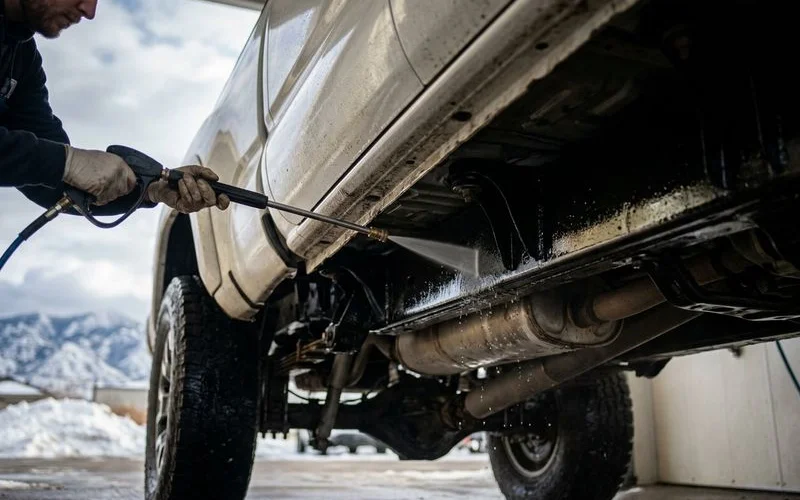
Undercarriage washing is non-negotiable in Boise. Since magnesium chloride is sprayed as a liquid, it mists up into the chassis cavities that a standard hose spray cannot reach.
Most automatic car washes in the valley offer an undercarriage blast. This 30-second rinse is often more valuable than the wash itself.
Pre-Winter Preparation
The best defense is a strong offense. Our shop schedules fill up quickly in late October. Savvy owners know that once the first freeze hits, the bonding process for protective products slows down.
Paint Protection: Sealant vs. Ceramic
We are often asked if wax is enough for an Idaho winter. The short answer is no. Natural carnauba waxes break down quickly under the chemical assault of de-icers.
Compare your two best options below:
- Synthetic Paint Sealant: This is a polymer-based product that chemically bonds to the paint. It typically lasts 4-6 months, which is just enough to get you from Halloween to Easter.
- Ceramic Coating: This is a hardened silica layer (SiO2) that provides superior chemical resistance. It effectively blocks the magnesium chloride from contacting your clear coat.
If you have a ceramic coating, schedule a decontamination wash in November to unclog the coating’s pores.
Undercoating and Rust Protection
For those planning to keep their truck or SUV for more than five years, fluid film or lanolin-based undercoatings are highly effective. These non-hardening coatings “creep” into seams and crevices where rust starts.
We caution against rubberized spray-on coatings if the vehicle already has rust. They can trap moisture against the metal and accelerate the decay, acting like a wet bandage over a wound.
Windshield and Glass
You must check your windshield for even the tiniest micro-chips before temperatures drop. The freeze-thaw cycles in Boise will turn a pinhead-sized chip into a horizontal crack across your entire line of sight overnight.
Our team also advises switching to a low-temperature washer fluid immediately. Look for “purple” or “orange” fluids rated for -25°F or lower. The standard blue fluid often freezes in the reservoir or on the glass due to wind chill, blinding you when you need visibility most.
Consider upgrading to “beam style” wiper blades (like Bosch Icon or Rain-X Latitude). These frameless blades do not have joints that freeze up with ice, ensuring they stay flexible during a storm.
Important Note on Tires: If you use studded snow tires, remember that Idaho law permits their use only from October 1 to April 30.
Interior Protection During Winter
We find that damage requiring interior detailing is often more annoying to owners than the exterior grime. The grit used on Boise roads acts like sandpaper when ground into your carpets.
Floor Mats
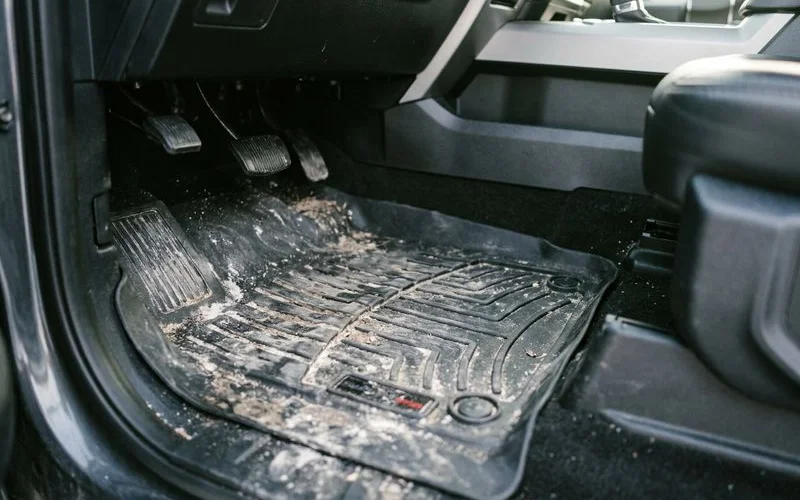
Factory carpet mats are essentially sponges for salt water. We strongly recommend replacing them with laser-measured rubber liners (like WeatherTech or Husky) that run up the sides of the footwell.
This design traps the meltwater so it evaporates rather than soaking into the vehicle’s floor pan. Once that water hits the metal floor pan, it can cause mold and rust from the inside out.
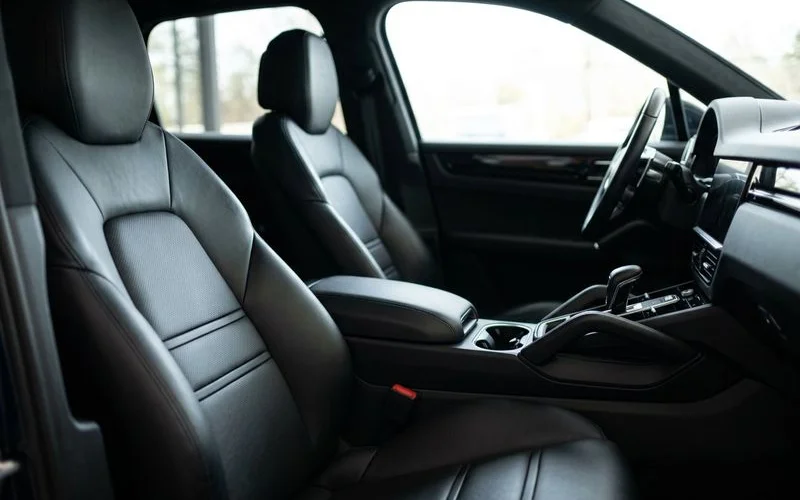
Leather Care
Boise winters are incredibly dry, with humidity levels often dropping significantly indoors. This dryness causes leather fibers to shrink and crack.
Our detailers apply a heavy cream conditioner in October to saturate the leather pores.
You should avoid “all-in-one” cleaner/conditioner sprays during winter. They are generally too light to prevent dehydration. A dedicated conditioner that sits on the surface for a few hours before buffing is the only way to combat the high-desert dryness.
Winter Washing Best Practices
Timing
You should aim to wash your car when the temperature is 35°F or higher. If you wash when it is below freezing, you risk freezing your door seals shut. In Boise, the warmest part of the day is usually between 2:00 PM and 4:00 PM.
Method
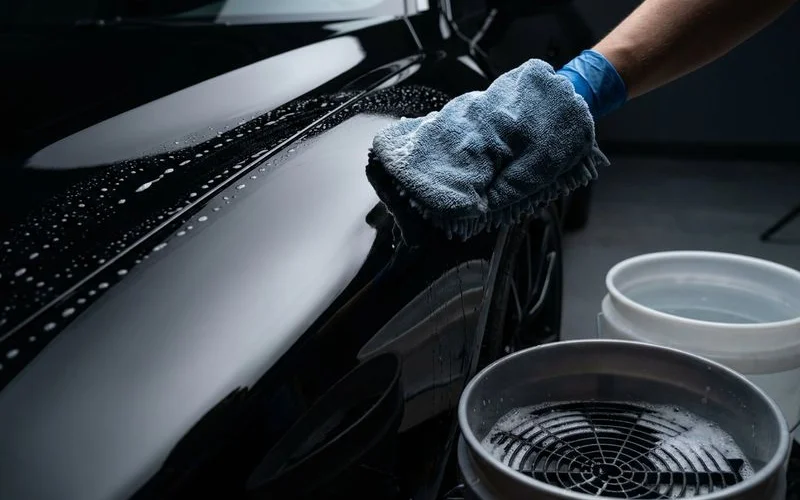
If you prefer hand washing, use the “two-bucket method” with grit guards to avoid scratching your paint with the sand you are trying to remove. Warm water is a luxury that makes a huge difference in breaking down the road film.
For automatic washes, we suggest touchless options if your car is only lightly dusted with salt. However, if you have a heavy buildup of road film, a touchless wash often fails to remove the static bond of the magnesium chloride.
In that case, a high-quality soft-touch wash is safer for the paint than leaving the chemical residue to bake on.
Post-Wash
Always wipe down your door jambs and rubber seals immediately after the wash. Our pro tip is to apply a silicone stick lubricant (or even cooking spray on a rag in a pinch) to the rubber door seals. This prevents the water from freezing the rubber to the metal frame.
Spring Recovery
Once the street sweepers have cleared the sand in April, it is time to undo the winter’s effects. A simple wash is not enough to remove the embedded contaminants.
Our spring protocol includes:
- Iron Decontamination: A chemical spray that dissolves the orange “rust specs” (brake dust and rail dust) embedded in your paint.
- Clay Bar Treatment: This mechanically pulls out the grit that remains after washing.
- Carpet Extraction: Hot water extraction to pull the salt crystals out of the fibers before they cause permanent staining.
This reset is vital for keeping your vehicle’s value high. Winter in Boise is tough on cars, but with the right plan, your vehicle can come out the other side looking like it spent the season in the garage.

Boise Mobile Auto Detailing Team
Professional detailing specialists serving Boise and the Treasure Valley.