Single-Stage vs Multi-Stage Paint Correction: What Your Vehicle Needs
Understand the differences between single-stage and multi-stage paint correction to determine the right level of service for your vehicle's condition and your goals.
Understanding Paint Correction Stages
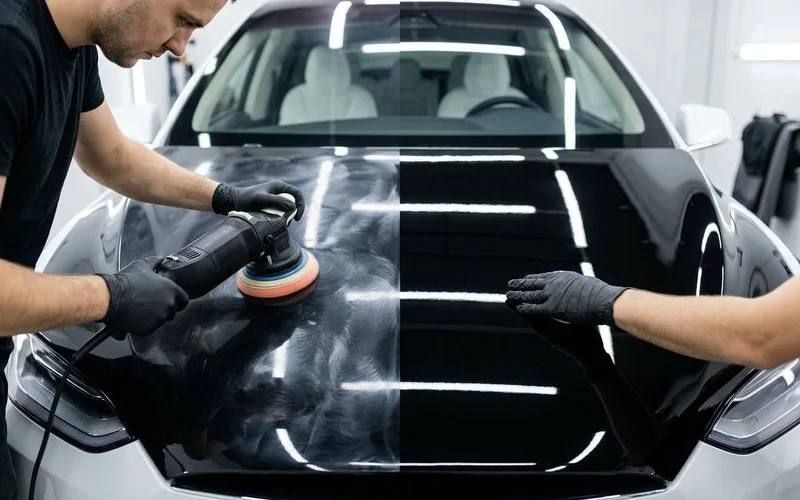
Paint correction is the process of permanently removing imperfections from a vehicle’s clear coat through controlled abrasion. The term “stage” simply refers to the number of distinct polishing steps required to achieve the desired finish.
We approach this choice based on three main factors: the current condition of your paint, the specific result you want, and the amount of clear coat available.
Physics dictates that to remove a scratch, you must remove the surrounding paint down to the level of the defect.
Each step utilizes a specific combination of abrasive liquids (compounds or polishes) and machine pads to refine the surface.
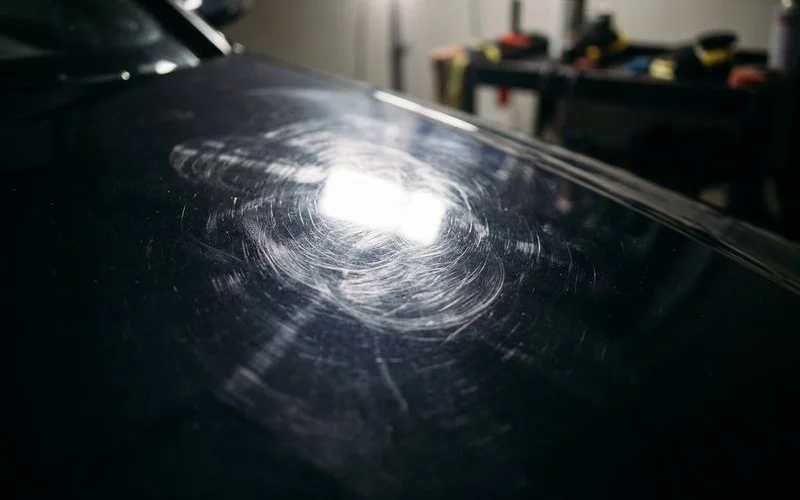
For most vehicles driven here in the US, the paint has accumulated a mix of swirl marks, random isolated deep scratches (RIDS), water spots, and oxidation. The severity of these defects dictates whether a single step will suffice or if multiple stages are necessary.
Single-Stage Paint Correction
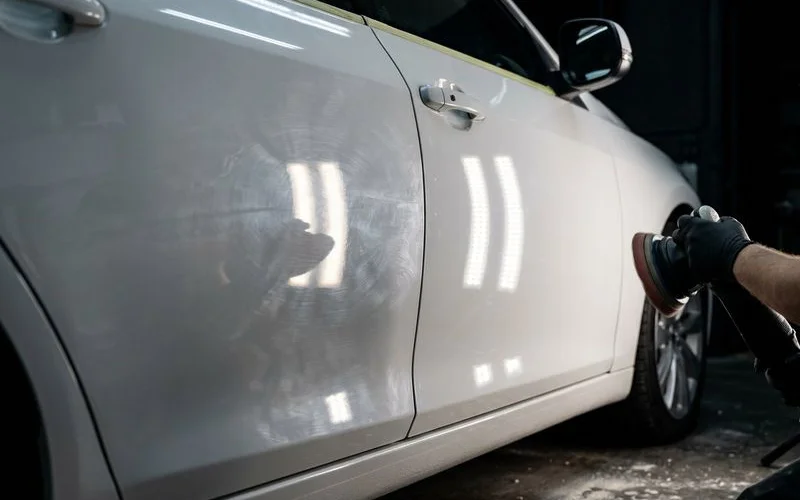
A single-stage correction uses one compound and pad combination to both cut into the clear coat and refine the finish in a single pass.
We consider this method the industry standard for “enhancement” services, and it suits about 70% of the daily-driven vehicles we see.
This process relies heavily on modern abrasive technology.
Our technicians typically use a “one-step” product like Koch-Chemie Micro Cut or a Rupes DA Fine polish. These engineered liquids allow us to remove moderate defects while finishing down to a high gloss without switching pads.
What Single-Stage Corrects
Single-stage correction typically removes 50 to 70 percent of visible swirl marks and light scratches.
It effectively addresses surface-level oxidation, light water spotting from sprinklers, and the general gray haziness that dulls your car’s shine.
We find that for many vehicle owners, this level of correction restores a “showroom” feel without the cost of perfection.
The goal here is gloss enhancement rather than total defect elimination. Deeper scratches will remain, but the increased gloss makes them significantly less noticeable to the naked eye.
The Process
After a thorough wash, chemical decontamination, and clay bar treatment, the detailer selects a medium-cut compound.
We pair this with a polishing pad tailored to your specific paint hardness.
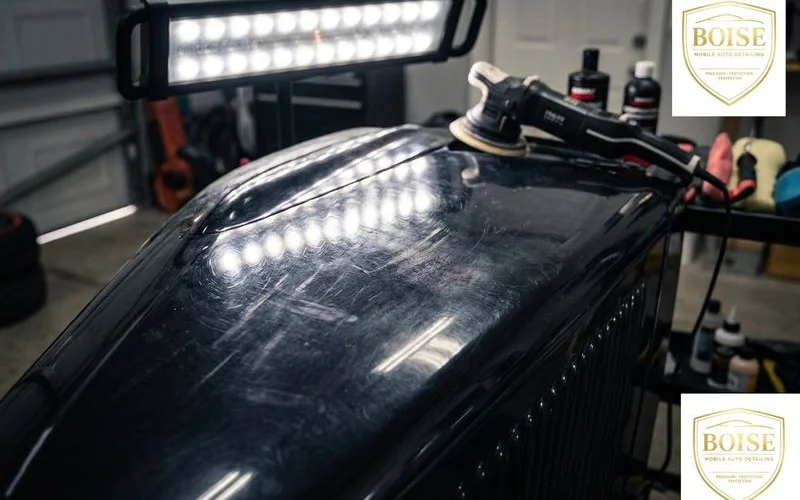
The compound is worked across each panel using a dual-action polisher like a Rupes BigFoot or Flex XC.
Modern technology has changed how we approach this step. In the past, compounds needed time to break down. Today, we often use Super Micro Abrasive Technology (SMAT). These non-diminishing abrasives provide a consistent cut from the start of the cycle to the end, allowing for faster and more uniform results in a single step.
Ideal Candidates for Single-Stage
- Daily Drivers: Vehicles exposed to daily hazards where absolute perfection is impractical.
- Light Colors: White, silver, or light gray paints that hide defects well.
- Lease Returns: Vehicles needing to meet inspection standards without over-investing.
- Budget-Conscious Projects: Owners seeking a massive gloss improvement for a lower price point.
- Thin Clear Coat: Older vehicles where preserving paint thickness is the priority.
Multi-Stage Paint Correction
Multi-stage correction usually consists of two steps but can occasionally require three.
We use progressively finer compounds and pads during this process.
This service is recommended when the goal is near-perfect defect removal.
Each stage builds on the previous one to chase deeper scratches and refine the surface to a mirror-like finish.
Two-Stage Correction
The most common multi-stage approach splits the work into two distinct mechanical processes.
Stage 1 - The Heavy Cut: We start with an aggressive compound and a firm pad, often made of microfiber or wool. This stage does the heavy lifting. It removes deep swirl marks, etching from bird droppings, and heavy oxidation. Because this step is aggressive, it often leaves behind faint micro-marring or “haze.”
Stage 2 - The Refinement: A fine polish paired with a soft foam finishing pad follows the cutting stage. This step removes the haze left by the first stage and jewels the paint to a high gloss. It creates the deep, “wet” look that distinguishes a show car from a regular clean car.
Three-Stage Correction
In cases of severe paint neglect, a three-stage approach adds an intermediate polishing step.
We reserve this for vehicles with heavy defects or specific paint types.
Some German luxury vehicles, for example, feature “CeramiClear” coats that are notoriously hard and require this extra level of effort.
This might even involve “wet sanding” in extreme cases to level out the texture of the paint, known as orange peel, before the polishing stages begin.
What Multi-Stage Corrects
A thorough two-stage correction can remove 85 to 95 percent of visible imperfections.
While no correction can fix a scratch that has gone through the clear coat (you can catch these with your fingernail), multi-stage correction ensures that the remaining surface is as flawless as physically possible.
Ideal Candidates for Multi-Stage
- Black or Dark Vehicles: These colors show every micro-scratch and require the second step for a haze-free finish.
- Ceramic Coating Prep: Owners investing $1,000+ in a coating often want the underlying paint perfect first.
- Show Cars: Vehicles intended for display or high-level concourse events.
- Resale Value: Luxury or exotic cars where paint condition significantly impacts market value.
- Neglected Paint: Cars that have been through automatic tunnel washes for years.
Clear Coat Thickness Considerations
Every time a polisher touches your car, a small amount of clear coat is removed.
We treat clear coat as a non-renewable resource.
Factory clear coat is incredibly thin. It typically averages between 35 to 50 microns. To put that in perspective, a standard Post-it note is about 76 microns thick. You have less than a Post-it note’s worth of protection on your car.
Before any correction work, a professional detailer measures the paint thickness with an electronic gauge.
This data is critical for safety. If the clear coat is too thin (below 25 microns), aggressive correction could strike through to the base coat, requiring a repaint.
Vehicles that have been polished aggressively in the past may have very little material left.
Our protocol involves measuring multiple spots on every panel to map out the paint’s health. This ensures we preserve the integrity of the finish while still removing defects.
Paint Thickness vs. Correction Type
| Measurement | Implication for Correction |
|---|---|
| 120+ Microns | Healthy total thickness. Safe for multi-stage correction. |
| 80-100 Microns | Standard range. Moderate correction is generally safe. |
| Below 70 Microns | High risk. We recommend single-stage or light polish only. |
Time and Cost Differences
The practical differences between single and multi-stage correction extend to both time in the shop and financial investment.
We have broken down the typical expectations for the US market in 2026 below.
Comparison of Service Tiers
| Feature | Single-Stage Correction | Two-Stage Correction | Three-Stage Correction |
|---|---|---|---|
| Time Required | 4 to 6 hours | 10 to 15 hours | 20+ hours (2-3 days) |
| Defect Removal | 50-70% (Enhancement) | 85-95% (Near Perfect) | 95%+ (Restoration) |
| 2026 Cost Est. | $400 - $800 | $900 - $1,500+ | $2,000+ |
| Best For | Daily Drivers, Leases | Dark Paint, Ceramic Prep | Show Cars, Classics |
For vehicle owners weighing these options, the decision often comes down to the vehicle’s paint color and intended use.
A silver Toyota Camry used for commuting is perfect for single-stage.
A black Porsche 911 meant for weekend drives will likely need two-stage correction to look its best.
Making the Right Choice
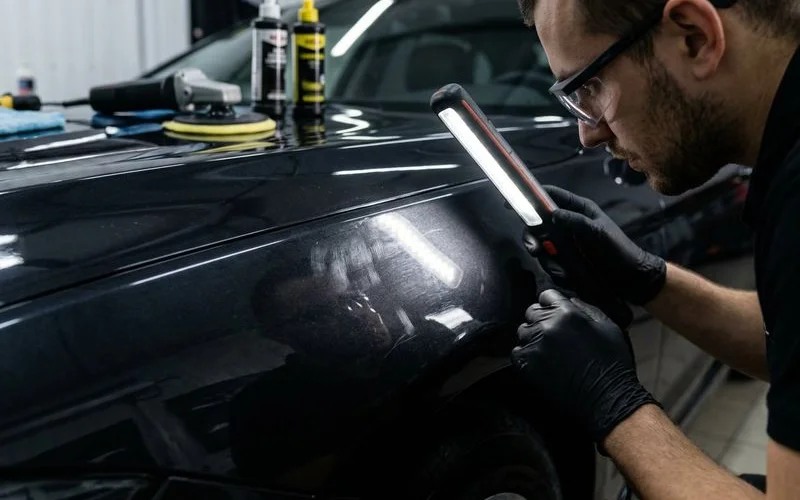
The most reliable way to determine which correction level your vehicle needs is a professional assessment under proper lighting.
We always recommend inspecting the paint with a dedicated “scangrip” light that mimics direct sunlight.
A trained detailer can evaluate the specific type of defects present and measure the clear coat thickness to see what is safe to remove.
Our advice is to choose the least aggressive method that meets your goals.
Quality always trumps quantity. A well-executed single-stage correction performed by a skilled technician looks far better than a rushed multi-stage job that leaves holograms and buffer trails.
Boise Mobile Auto Detailing Team
Professional detailing specialists serving Boise and the Treasure Valley.