6 Signs Your Car Needs Paint Correction Before It Gets Worse
Learn to identify the six telltale signs that your vehicle's paint needs professional correction. Addressing these issues early prevents costly damage for Boise drivers.
Recognizing Paint Damage Before It Becomes Permanent
You know how a small scratch seems to annoyingly catch the light every time you walk to your car? That minor imperfection is often the first warning of a failing clear coat.
We see hundreds of vehicles where owners ignored these early signals.
The result is usually deep oxidation that requires invasive restoration rather than a simple polish. Addressing these issues early saves the factory finish and keeps money in your pocket.
Our team focuses on spotting these symptoms before they cross the line into permanent damage.
For vehicle owners in the US, particularly in high-altitude or sunny regions, the environment is aggressive. UV exposure and mineral-rich water accelerate paint degradation much faster than most people realize.
Sign 1: Visible Swirl Marks in Direct Sunlight
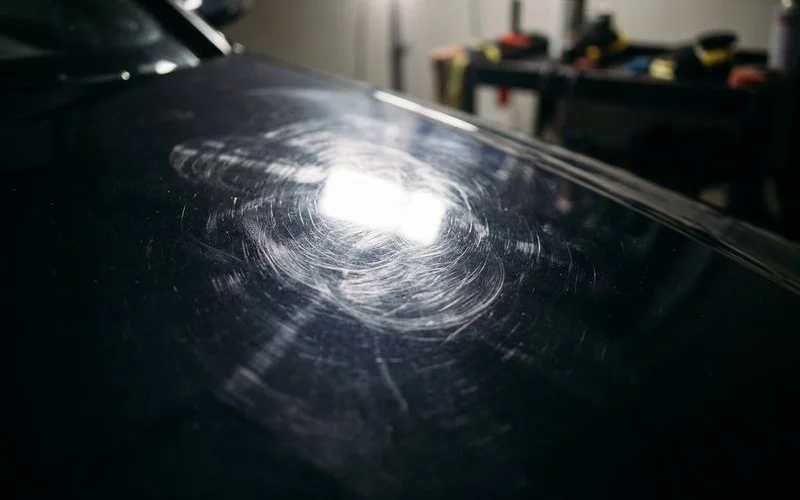
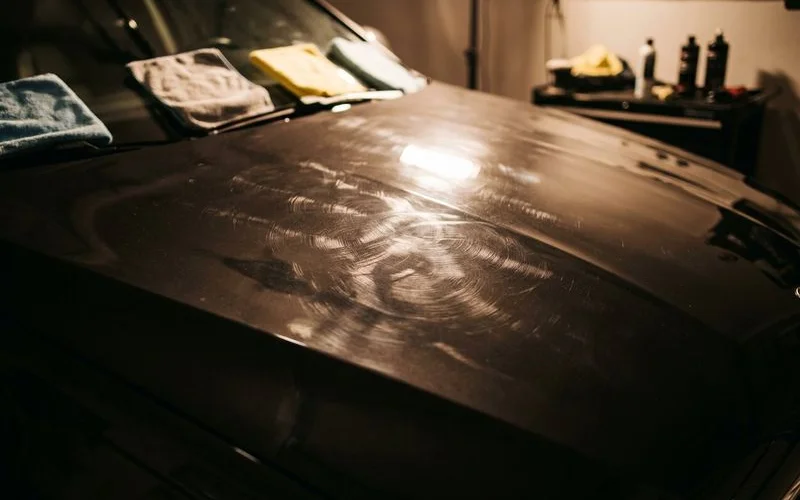
The most common cry for help from your paint comes in the form of “spider-web” scratches. We identify these circular marks immediately by inspecting the paint under direct sunlight or using a Scangrip inspection light.
These microscopic scratches scatter light in every direction. This scattering effect creates a hazy appearance that robs the vehicle of its color depth.
The “Tunnel of Doom” Effect
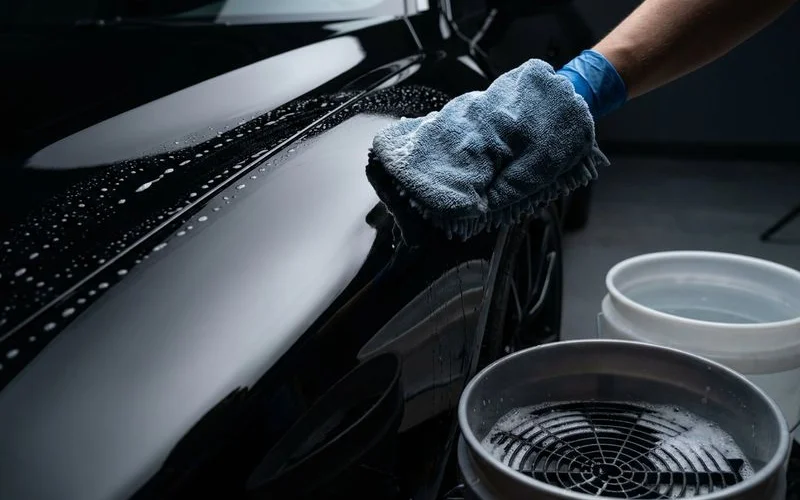
Swirl marks are almost exclusively caused by friction during washing. Our experience points to automatic car washes with spinning brushes as the number one offender.
The nylon bristles in these machines act like sandpaper. They trap grit from the muddy truck that went through before you and drag it across your hood at high speeds.
Recent 2025 industry reports indicate that a single pass through an older friction wash can inflict thousands of micro-scratches.
Common Sources of Swirls:
- Automatic Car Washes: Spinning brushes are abrasive.
- Dirty Towels: Wiping paint with a dry or contaminated cloth.
- Car Covers: Wind vibrates the cover against dust on the paint.
- Snow Removal: Using a stiff household broom or scraper on painted panels.
If you see this web-like pattern, your clear coat is already compromised. We recommend acting fast because these tiny valleys trap dirt and speed up oxidation.
Sign 2: Water Spots That Will Not Come Off
Water spots look harmless, but they are actually mineral burns. We classify these spots into two specific grades based on how deeply they have penetrated the surface.
In many parts of the US, water hardness levels exceed 10 grains per gallon. This high mineral content means that water left to dry on a hot hood will rapidly deposit calcium and magnesium.
The Vinegar Test
Fresh mineral deposits (Type I) sit on top of the paint. You can often remove these with a simple 50/50 mix of distilled white vinegar and water.
We advise clients to test a small, inconspicuous spot first.
If the mark remains after the vinegar wipe, the minerals have etched into the clear coat (Type II). This is physical damage where the alkaline minerals have eaten away a microscopic layer of paint.
Our technicians use paint correction to level the clear coat surrounding the crater. This mechanical leveling is the only way to safely remove these permanent marks without repainting.
Risk Factors for Water Spotting:
- Lawn Sprinklers: Often use untreated, hard groundwater.
- Parking Garages: Leaky pipes often drip mineral-heavy water.
- Summer Rain: Brief showers followed by intense sun bake deposits onto the surface.
Sign 3: Paint Feels Rough to the Touch
Clean paint should feel smooth, like a mirror or a brand-new pane of glass. We use a tactile diagnostic trick called the “Bag Test” to reveal contamination that your eyes miss.
How to Perform the Bag Test
Place your hand inside a standard thin sandwich bag. Run it lightly over your freshly washed hood or roof.
Our clients are often shocked by the gritty, sandpaper-like texture they feel through the plastic.
That texture is “embedded contamination.” It typically consists of brake dust, rail dust (iron particles), and industrial fallout. These sharp particulates pierce the clear coat and begin to rust from the inside out.
A clay bar treatment can pull these contaminants out. However, the clay process is abrasive and often leaves its own minor marring behind.
We always follow decontamination with a machine polish. This smooths the surface and reseals the pores of the clear coat against future bonding.
Sign 4: Faded or Oxidized Paint
Oxidation is the chemical breakdown of your clear coat’s resin system. We often describe this as the paint looking “chalky” or dry.
This condition kills the gloss and leaves the vehicle looking neglected.
The issue is particularly aggressive in high-altitude locations like the Mountain West. Data shows that UV radiation intensity increases by approximately 4% to 5% for every 1,000 feet of elevation gain.
Visualizing the Damage
Vehicles sitting at higher elevations receive significantly more UV radiation than those at sea level. We see red, black, and dark blue vehicles fail first because these pigments absorb more heat and UV energy.
Early-stage oxidation appears as a slight cloudiness. A professional single-stage polish can typically fix this.
Our team warns that once the clear coat fails completely (delamination), paint correction is no longer an option.
Cost Comparison: Correction vs. Repaint (2025/2026 Estimates)
| Service | Estimated Cost (US Avg) | Time Required | Outcome |
|---|---|---|---|
| Paint Correction | $500 - $1,500 | 1 - 2 Days | Restores factory clear coat |
| Quality Repaint | $4,500 - $10,000 | 2 - 4 Weeks | Aftermarket paint layer |
Repainting is expensive and lowers the resale value of the vehicle. A timely paint correction costs a fraction of that price and keeps the car original.
Sign 5: Paint Looks Dull Even After Washing
A dull finish means your clear coat is scattering light rather than reflecting it. We refer to this metric as the “Distinctness of Image” (DOI).
Micro-scratches and oxidation create a rough landscape on your paint. These defects diffuse light rays in random directions instead of shooting them back to your eye.
The Physics of Gloss
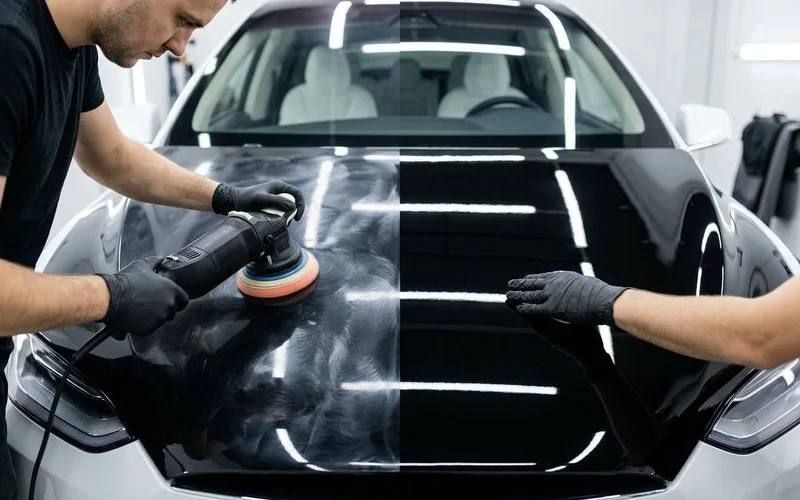
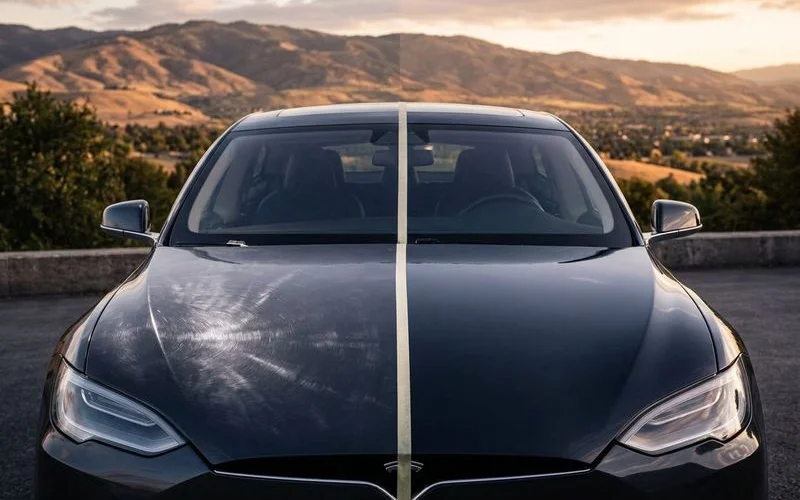
Paint correction restores gloss by mechanically leveling the clear coat until it is microscopically flat. We typically remove only 2 to 5 microns of material during this process.
That is roughly 3% of the thickness of a Post-it note.
This process allows light to reflect uniformly. The result is the deep, “wet” look associated with showroom-new vehicles.
Sign 6: You Are Planning to Apply Protective Coating
Correction is the most critical preparation step for any long-term protection package. We consider paint correction mandatory before installing ceramic coatings or Paint Protection Film (PPF).
Why Correction is Non-Negotiable
Ceramic coatings form a permanent chemical bond with your clear coat. Our technicians know that applying a coating over scratches or swirls effectively “locks” them in for years.
The coating’s high refractive index acts like a magnifying glass. It often makes underlying defects more visible, not less.
The Impact of Prep Work on Ceramic Performance:
- Bond Strength: Coatings bond 30-50% stronger to a surgically clean, corrected surface.
- Visual Clarity: Correction removes the “haze” so the coating’s gloss can shine through.
- Durability: A flat surface allows for an even application, preventing high spots and premature failure.
For vehicle owners investing in ceramic protection, skipping correction is a waste of potential. We ensure the surface is flawless so the coating can perform exactly as designed.
What Happens If You Wait Too Long
Delaying paint correction allows minor surface issues to evolve into structural paint failures. We have seen clear coats thin out to the point where they fracture and peel.
This condition is known as clear coat failure.
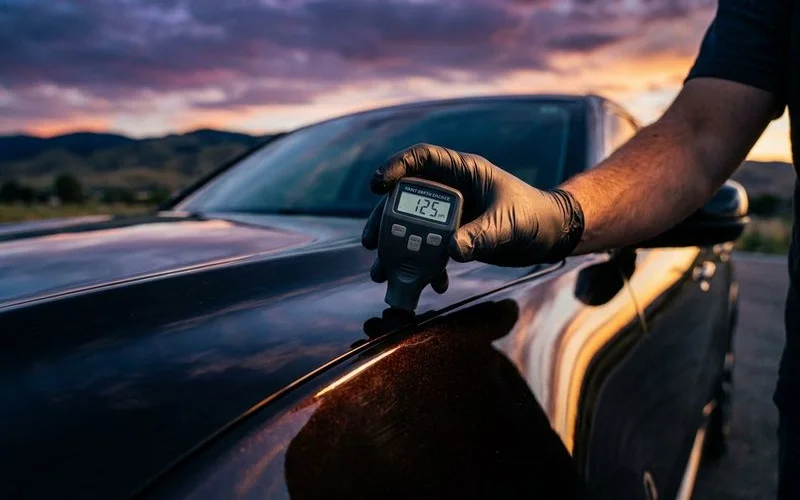
Modern factory clear coats are thinner than ever. They often measure only 35 to 50 microns thick, giving you a limited window to correct damage before the layer is too thin to polish safely.
The financial difference is stark. Our correction packages are significantly more affordable than a body shop respray.
If you spot any of these six signs, look for a reputable detailer immediately. A quick consultation can determine if a light polish is all that is needed to save your paint.
Boise Mobile Auto Detailing Team
Professional detailing specialists serving Boise and the Treasure Valley.