How to Remove Pet Hair From Car Seats and Carpets
Practical methods for removing stubborn pet hair from your vehicle's interior surfaces. From DIY techniques to professional extraction for Boise pet owners.
Why Pet Hair Is Uniquely Difficult to Remove
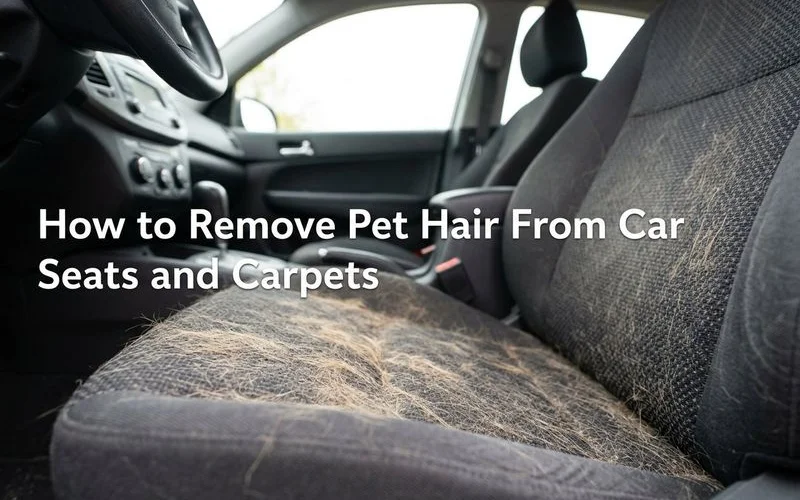
Anyone who has tried to vacuum a Golden Retriever’s legacy from a vehicle seat knows the frustration. Pet hair embeds itself into fabric weaves with a tenacity that defies standard cleaning methods.
We see this struggle daily. The problem stems from the hair’s physical properties: it is thin enough to work its way deep into fibers, has natural oils that create adhesion, and utilizes static electricity to bond with synthetic materials.
In the Boise area, where outdoor recreation with dogs is a way of life for many residents, this is one of the most common interior detailing challenges we encounter. Whether your dog accompanies you to the Boise Foothills, Lucky Peak, or simply rides along for errands, pet hair accumulates faster than most owners expect.
The good news is that effective removal is entirely possible with the right approach. Our team has tested countless methods, and we have found that the most effective ones require more mechanical agitation than simply running a vacuum over the surface.
DIY Methods That Actually Work
The Rubber Glove Method
This is one of the simplest and most effective DIY techniques for surface-level hair. Put on a pair of standard rubber dishwashing gloves or heavy-duty nitrile gloves, lightly dampen them, and run your hands across the upholstery in short, firm strokes.
We recommend using nitrile gloves specifically. The rubber material creates high friction (known as the triboelectric effect) that pulls embedded hair to the surface and clumps it together for easy removal.
Work in one direction rather than back and forth to create consistent piles. Periodically rinse the glove to remove accumulated hair and re-dampen. This method works well on fabric seats, carpet, and headliners. It is less effective on leather but still useful for getting hair out of leather seat stitching and perforations.
The Pumice Stone Approach
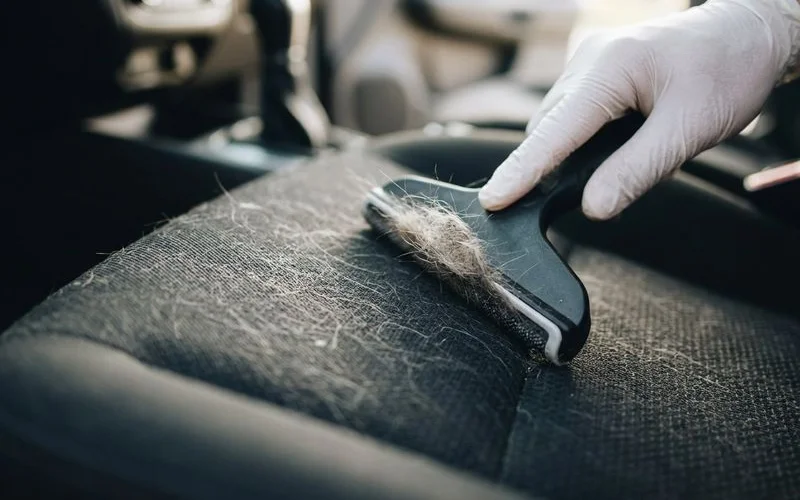
A natural pumice stone, or a specialized tool like the Fur-Zoff, lightly dragged across fabric surfaces, is remarkably effective at pulling embedded pet hair to the surface. Use gentle pressure and short strokes.
The porous surface of the pumice creates enough friction to dislodge hair without damaging most automotive fabrics. Test this method on an inconspicuous area first, particularly on delicate or older upholstery.
You must avoid touching plastic trim pieces. The abrasive stone will instantly scratch hard plastics, leaving permanent damage.
Fabric Softener Solution
Mix a small amount of liquid fabric softener with water in a spray bottle. While many guides suggest a strong mix, we recommend a ratio of one part softener to seven parts water to avoid leaving a sticky residue.
Lightly mist the affected area and then wipe with a clean cloth or vacuum. The science here is simple: fabric softeners contain cationic surfactants that neutralize the negative static charge holding the hair to the seat fibers.
This method is particularly useful as a pre-treatment before vacuuming. It also leaves a pleasant scent, though you should ensure the fabric softener you use does not stain or discolor your specific upholstery material. Spot-test first.
The Analan Mini Detailer
For years, the Lily Brush was the standard for detailers, but the Analan Mini Pet Hair Remover has largely replaced it in our kits due to its versatility. This tool features three edges with different gear densities—large, medium, and fine—which allows you to tackle different hair types and fabric textures.
We start with the largest gear side to drag the bulk of the hair into a pile. Then, switch to the fine side for the stubborn strands left behind. The triangular shape helps you get into tight corners where seat cushions meet the backrest.
The Drill Brush Technique
If you have a cordless drill, you can turn it into a high-powered hair removal tool. Attach a carpet brush attachment, which uses the drill’s rotation to flick embedded hair out of the fibers.
Select the White (Soft) brush for upholstery and seats to prevent fraying. Use the Yellow (Medium) brush for durable floor mats and trunk liners.
Always keep the drill moving and use a low-speed setting. Generating too much friction heat in one spot can melt synthetic fibers, causing permanent damage to your carpet.
Lint Roller or Packing Tape
For surface-level pet hair that has not worked deeply into the fabric, a lint roller provides quick, satisfying results. For more stubborn surface hair, wrapping wide packing tape around your hand, sticky side out, and pressing it firmly onto the upholstery works similarly but with stronger adhesion.
These methods are useful for maintenance between deeper cleaning sessions but are not sufficient for hair that has embedded itself into the fabric weave.
Comparison of DIY Methods
We have broken down the efficiency of these tools based on our shop experience to help you choose the right one.
| Method | Best For | Effectiveness on Embedded Hair | Risk of Damage |
|---|---|---|---|
| Rubber Glove | Seats & Headliners | Medium | Low |
| Pumice Stone | Carpets & Mats | High | Medium (Scratches Plastic) |
| Analan Tool | Tight Corners & Edges | High | Low |
| Drill Brush | Large Flat Areas | Very High | Medium (If Overused) |
| Fabric Softener | Pre-treatment | Medium (Reduces Static) | Low (If Diluted) |
Specialized Pet Hair Vacuum Attachments
Several manufacturers produce vacuum attachments designed specifically for pet hair removal from upholstery. These typically feature rubber bristles, textured surfaces, or oscillating mechanisms that agitate the fabric and loosen embedded hair as you vacuum.
Look for turbine-driven hand tools if you are using a standard shop vacuum. They are more effective than standard vacuum nozzles and represent a worthwhile investment for pet owners.
The Professional Approach
When DIY methods are not producing the results you need, professional interior detailing addresses pet hair with tools and techniques that are difficult to replicate at home.
Commercial Hot Water Extraction
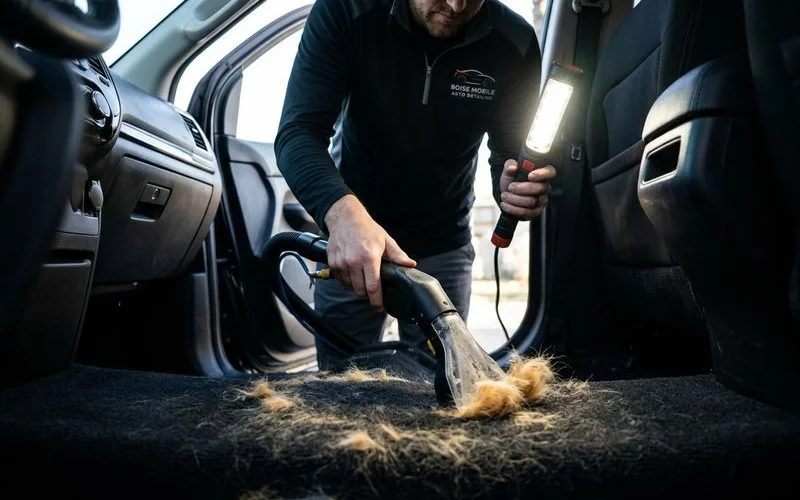
Professional-grade extractors force hot water (often heated to 200°F or higher) and cleaning solution deep into fabric fibers and immediately vacuum it back out along with embedded contaminants, including pet hair.
The combination of heat, moisture, and powerful suction removes hair that mechanical methods alone leave behind. This is the most thorough method available for fabric seats and carpets.
The Tornador Air Tool
Professional detailers often use a Tornador Blow Gun connected to an air compressor to remove hair from tight crevices. This tool spins a tube of air at high velocity, creating a “tornado” effect that blasts hair out of weave and seams where vacuums can’t reach.
We use this specifically for the gaps between seats, console joints, and the channels of seat tracks. It is the only way to effectively clear the “impossible” areas without disassembling the vehicle interior.
Steam Cleaning
Steam cleaning relaxes the fibers and the hair simultaneously, breaking the static and adhesive bonds that hold pet hair in place. The heat also sanitizes the surface, addressing bacteria and allergens that accumulate in areas where pets sit.
For vehicle owners in Boise with allergy concerns, steam cleaning provides both cleaning and sanitization benefits.
Prevention Strategies
Removing pet hair is labor-intensive regardless of the method used. Reducing the amount that accumulates in the first place makes every cleaning session more manageable.
Heavy-Duty Seat Covers
A dedicated pet seat cover is your first line of defense. Look for covers made from 600D Oxford cloth, a heavy-duty polyester material that is waterproof and scratch-resistant.
Brands like 4Knines or Meadowlark offer hammocks that protect not just the seats, but the footwells and door panels as well. These are significantly easier to remove and shake out than it is to detail an entire car interior.
Regular Brushing
Brushing your dog before car rides removes loose, ready-to-shed hair before it gets into the vehicle. This does not eliminate the problem, but it measurably reduces the volume of hair deposited during each trip.
Use a deshedding tool like a Furminator or a rubber curry comb for short-haired breeds to catch the undercoat before it becomes a car interior problem.
Designated Pet Area
If your vehicle layout allows it, confining your pet to one area of the vehicle, typically the cargo area of an SUV or the back seat, concentrates the hair accumulation in one zone rather than distributing it throughout the cabin. This makes cleaning faster and more targeted.
Consistent Light Maintenance
A quick pass with a rubber glove or lint roller after each trip with your pet takes two minutes and prevents the gradual buildup that becomes a major project. The difference between daily maintenance and monthly deep cleaning is substantial.
Addressing Odor Along With Hair
Pet hair is rarely the only issue. Dander, skin oils, drool, and the general scent that dogs carry all transfer to vehicle interiors. Removing the hair addresses the visible problem, but odor elimination requires additional treatment.
We apply an enzyme-based odor eliminator after hair removal to break down the organic compounds responsible for pet odors rather than simply masking them. For persistent odor issues, professional ozone treatment or enzyme treatment of the entire cabin air system may be necessary.
For Treasure Valley pet owners who want to enjoy Idaho’s outdoor lifestyle with their dogs without sacrificing their vehicle’s interior condition, a combination of prevention strategies and regular maintenance makes the challenge entirely manageable. The key is consistency rather than occasional intensive cleaning sessions.
Boise Mobile Auto Detailing Team
Professional detailing specialists serving Boise and the Treasure Valley.