How Often Should You Detail Your Car Interior?
A practical guide to interior detailing frequency based on your driving habits, lifestyle, and the Boise climate. Learn what schedule keeps your cabin clean and protected.
There is a common misconception that detailing is just about aesthetics.
You might think a quick vacuum is enough, but that mindset often changes when owners realize the financial impact on their vehicle’s long-term value.
Current data from Kelley Blue Book indicates that a vehicle in “excellent” cosmetic condition can command a resale value 10% to 15% higher than one in “fair” condition.
Our team focuses on this asset-protection approach.
The difference between a standard car wash and a professional interior detail often determines whether your interior materials last five years or fifteen.
We are going to break down the specific variables that dictate your schedule and outline the exact timeline that makes sense for your driving habits.
There Is No Universal Answer
The frequency with which you should detail your car interior depends on how you use your vehicle, who rides in it, and what conditions it faces.
A commuter vehicle driven solo on paved roads in mild weather has vastly different needs than a family SUV that transports children, pets, sports equipment, and groceries through four distinct seasons.
We use a framework based on “contaminant load” to help you decide.
This specific metric determines the right schedule based on your personal circumstances rather than a generic recommendation.
Factors That Determine Your Schedule
Daily Usage and Commute
The more time you and your passengers spend in the vehicle, the faster the interior accumulates wear.
Hours spent in the driver’s seat translate directly to skin oils on the steering wheel, dust circulation through the cabin, and general abrasion on high-contact surfaces.
A pivotal study by CarRentals.com found that the average steering wheel carries over 600 times more bacteria than a public toilet seat, including roughly 700 different strains like Staphylococcus.
Our technicians see this biological buildup as a primary degradation factor for leather and vinyl.
If you drive for rideshare services or have a commute longer than 30 minutes, you are accelerating this wear significantly.
Passengers and Pets
Children and pets accelerate the need for interior attention significantly.
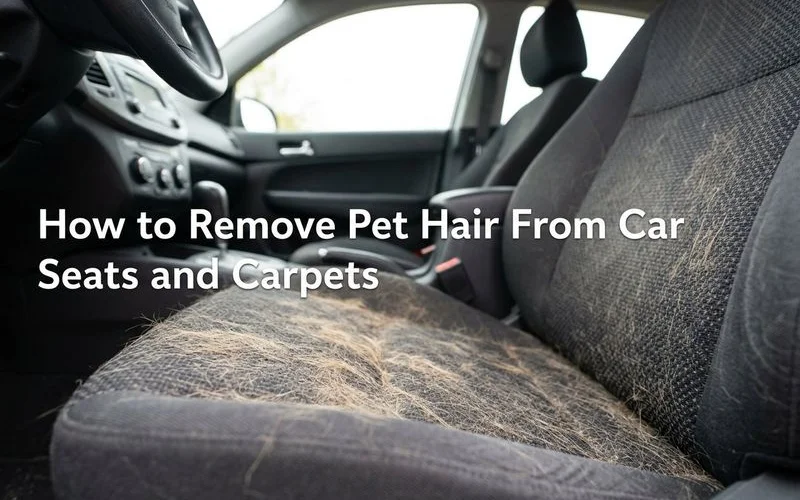
Pet dander and hair are more than just messy; they are potent allergens that get trapped in the headliner and ventilation system.
We often find that food crumbs, spilled drinks, muddy paws, and shed hair introduce contaminants that can stain, create odors, and damage surfaces if not addressed.
According to the Asthma and Allergy Foundation of America, pet dander can remain airborne for long periods and stick to surfaces like car upholstery, requiring specialized extraction to remove.
If your back seat regularly carries kids or dogs, your interior detailing needs are higher than average.
Climate and Season
Local weather patterns play a direct role in how your interior ages.
We deal with a unique set of challenges here in the Treasure Valley regarding seasonal shifts, but these principles apply to any region with distinct seasons.
Road salt, moisture from boots, and condensation during winter create conditions that promote mold and mildew growth in carpets and floor mats if moisture is not managed.
Summer brings dust from unpaved roads, pollen, and elevated cabin temperatures that accelerate the breakdown of leather and vinyl surfaces.
A study from San Jose State University confirmed that a parked car’s dashboard can reach temperatures upwards of 192°F in direct summer sun, causing materials to off-gas and become brittle.
The transition between muddy spring conditions and dusty summer conditions means the nature of interior contamination shifts throughout the year.
Eating and Drinking in the Vehicle
This is one of the most significant factors regarding cabin hygiene.
We call this the “organic variable” because it introduces biological material into the cabin.
Regular eating in the vehicle introduces food particles into carpet fibers, seat crevices, and areas beneath seats that are difficult to reach during casual cleaning.
These organic materials attract bacteria and pests, creating persistent odors that surface cleaning alone cannot resolve.
Recommended Schedules by Usage Profile
We have broken down the recommended frequency based on specific driver profiles in the table below.
This comparison helps you identify where you fit and how often you need professional intervention.
| Usage Profile | Full Detail Frequency | DIY Maintenance | Primary Risk Factor |
|---|---|---|---|
| Light Use (Solo commuter, no food) | Every 6 to 8 months | Monthly wipe-down | UV damage and dust accumulation |
| Moderate Use (Family, occasional passengers) | Every 3 to 4 months | Bi-weekly vacuum | Embedded dirt in carpets |
| Heavy Use (Pets, kids, eating allowed) | Every 2 to 3 months | Weekly vacuum & wipe | Bacteria growth and permanent staining |
| Commercial Use (Rideshare, sales, client transport) | Every 4 to 6 weeks | Twice weekly cleaning | General wear and negative client perception |
Light Use (Solo Commuter, No Pets, No Food)
If your vehicle serves primarily as a clean commuter and you maintain basic tidiness, a thorough professional interior detail twice a year is generally sufficient.
We suggest scheduling one session before summer to apply UV protection and one before winter to seal fabrics against moisture.
This strategy keeps the interior in good condition and addresses seasonal contaminant buildup.
Moderate Use (Family Vehicle, Occasional Passengers)
A family vehicle used for daily school runs, weekend activities, and regular errands benefits from quarterly professional attention.
We target the accumulation of embedded dirt in carpet fibers and seat fabric that becomes progressively harder to remove the longer it sits.
Quarterly cleaning prevents the “lived-in” smell from becoming a permanent feature of the car.
Heavy Use (Pets, Children, Frequent Eating)
Vehicles that carry pets, small children, or serve as a mobile dining room need the most frequent attention.
Our team uses heavy-duty extraction tools on these vehicles to remove organic matter deep within the foam of the seats.
Hair, crumbs, and spills that are not addressed regularly become embedded in surfaces and create odor issues that require deep extraction to resolve.
Commercial or High-Mileage Use
Vehicles used for business, rideshare, real estate showings, or any purpose where the interior reflects on your professional image should be maintained more aggressively.
We emphasize this because first impressions matter, and a clean interior communicates attention to detail.
Clients notice odors and stains immediately, often before they notice the quality of the drive itself.
What a Professional Interior Detail Includes
Understanding what a professional detail involves helps explain why it is more effective than routine home cleaning and why the recommended intervals exist.
We use industrial-grade equipment and chemistry that simply aren’t available in consumer-grade products.
Thorough Vacuuming and Debris Removal
Every surface, crevice, pocket, and gap is vacuumed with appropriate attachments.
We also use compressed air tools, often called “tornadors,” to blow out debris from tight spaces like air vents and seat tracks before vacuuming.
Seats are moved forward and back to access debris underneath.
Floor mats are removed and cleaned separately.
This process reaches areas that standard vacuuming at home typically misses.
Surface Cleaning and Sanitizing
All hard surfaces including the dashboard, center console, door panels, buttons, knobs, and steering wheel are cleaned with appropriate products.
We strictly avoid shiny, silicone-based dressings that attract dust and cause dangerous glare on the windshield.
Different materials require different cleaners: vinyl, plastic, leather, and glass each have specific requirements.
A professional detail uses the right product for each surface rather than a single all-purpose spray.
Carpet and Upholstery Extraction
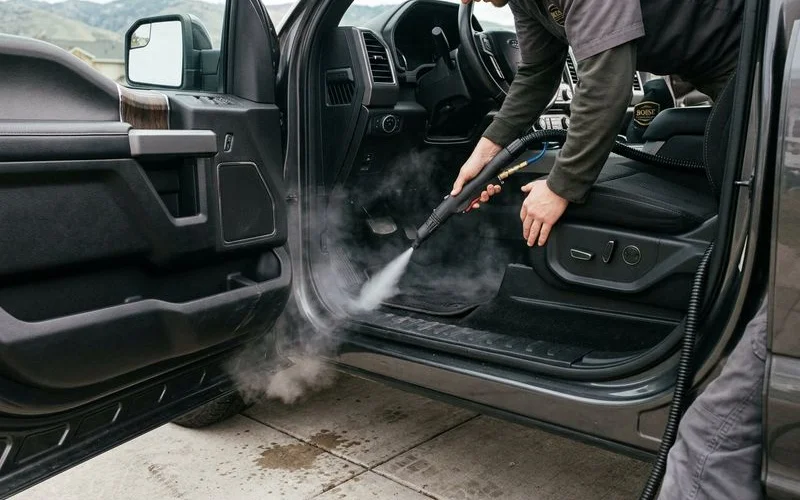
Hot water extraction or steam cleaning penetrates carpet fibers and fabric seat material to remove embedded dirt, stains, and contaminants that vacuuming alone cannot reach.
Our steamers operate at over 200°F, which is hot enough to kill bacteria, dust mites, and mold spores on contact.
This step makes the most significant difference in vehicles with accumulated grime, and it is the step most difficult to replicate at home without commercial equipment.
Leather Conditioning
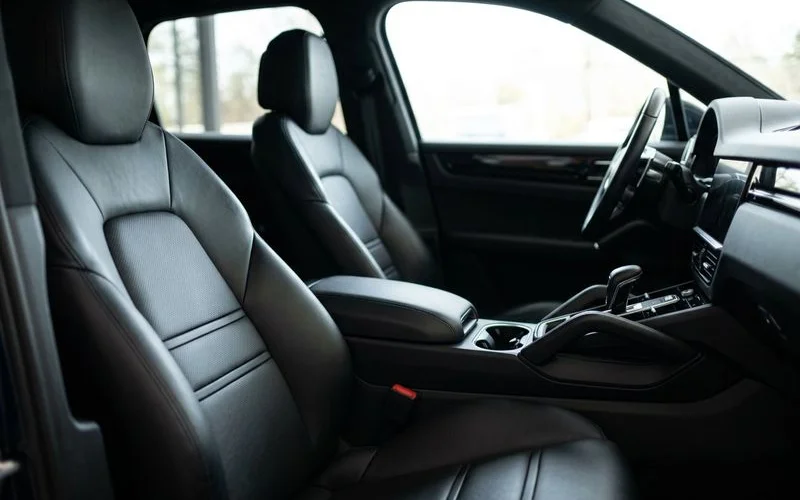
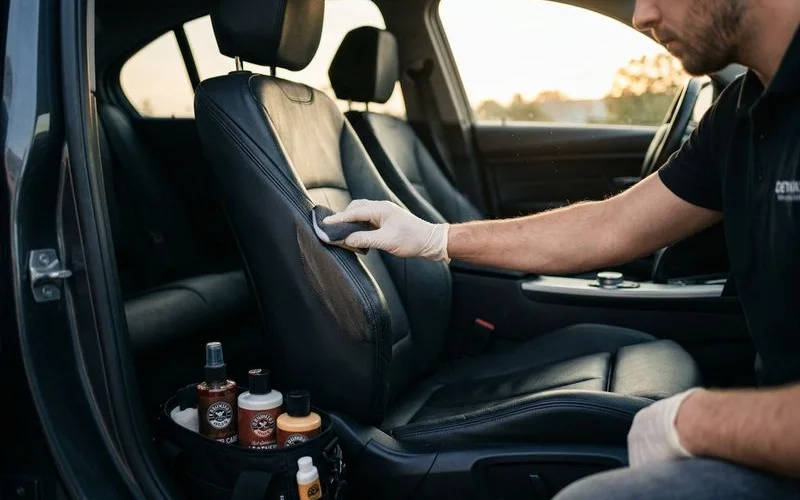
For vehicles with leather seats, proper conditioning after cleaning is essential.
We treat leather as skin because it dries out, cracks, and ages prematurely when not regularly moisturized.
In dry climates, where humidity levels often drop below 20 percent during winter, leather conditioning is not optional if you want your seats to maintain their appearance and structural integrity.
Proper pH-balanced conditioners keep the leather supple without making it greasy.
Glass Cleaning and De-Fogging
Interior glass cleaning removes the hazy film that builds up on the inside of windows from off-gassing vinyl and plastic, cigarette or vape residue, and general environmental accumulation.
We use specific waffle-weave towels and alcohol-based cleaners to ensure a streak-free finish.
Clean interior glass improves visibility and reduces glare, which is a safety consideration as well as an aesthetic one.
Maintenance Between Professional Details
The intervals between professional details are not meant to be periods of neglect.
We encourage simple habits that extend the value of each professional service:
- Remove trash daily: Take cups and wrappers out after every trip to prevent organic decay.
- Shake out mats: A weekly shake prevents dirt from grinding into the carpet backing.
- Wipe contact points: Clean the steering wheel, shifter, and door handles with a mild interior cleaner weekly.
- Address spills immediately: Blot liquids right away rather than letting them set into the foam.
- Use protection: Install seat covers or protective mats if you regularly transport pets or dirty equipment.
- Keep a microfiber towel handy: A quick wipe-down prevents dust from baking into the dashboard.
These habits do not replace professional detailing, but they significantly reduce the accumulation of contaminants between services and help maintain a pleasant cabin environment.
The Cost of Neglect
Delaying interior detailing beyond what your usage pattern requires does not save money in the long run.
We frequently see owners spend hundreds of dollars replacing floor mats or reupholstering seats that could have been saved with routine care.
Embedded stains become permanent.
Leather that dries and cracks requires repair or replacement rather than simple conditioning.
Mold that develops in damp carpet requires professional remediation rather than cleaning.
Odors that saturate porous materials become extremely difficult to eliminate completely.
Regular interior detailing is maintenance, not a luxury.
The schedule that fits your situation is the one that prevents damage from progressing to the point where basic cleaning is no longer sufficient.
Boise Mobile Auto Detailing Team
Professional detailing specialists serving Boise and the Treasure Valley.