Does an Automatic Car Wash Damage Your Paint? What the Evidence Shows
An objective look at whether automatic car washes cause paint damage. We examine the evidence, explain the mechanisms, and help Boise drivers make informed choices.
The Question Every Vehicle Owner Asks
We hear this question in our shop more than almost any other inquiry. Drivers want to know if the convenience of “the tunnel” is worth the potential risk to their vehicle’s finish.
The answer is rarely a simple yes or no.
Our exterior detailing team has inspected thousands of vehicles across the US, and the paint always tells the real story. While detailing purists often condemn automatic washes entirely, the reality for most American vehicle owners sits somewhere in the middle.
We know that keeping a car clean in a region with four distinct seasons requires a practical strategy. You have to balance paint preservation against the corrosive reality of road salts, brine, and industrial grime.
This guide breaks down the data to help you make an informed choice for your specific vehicle.
Types of Automatic Car Washes
Understanding the hardware that interacts with your car is the first step in risk management. We categorize these facilities into three distinct groups based on how they impact your clear coat.
Brush-Style (Friction) Washes
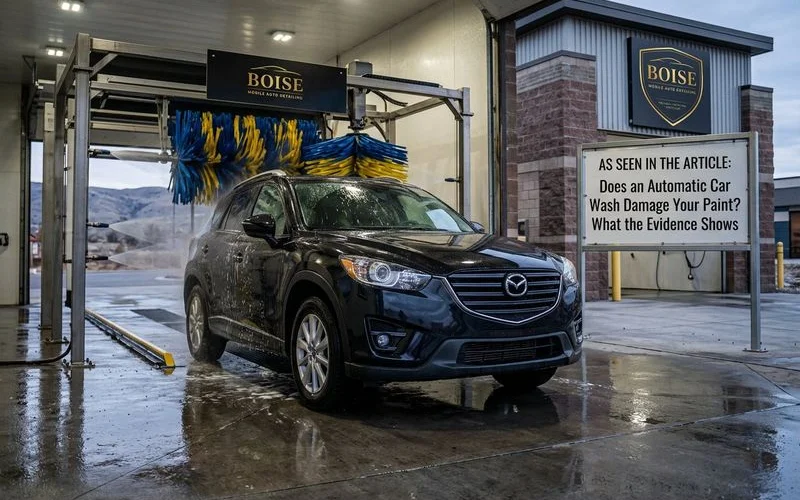
These traditional systems use large rotating elements to physically scrub the vehicle. The brushes are typically made of cloth strips, nylon, or polyethylene bristles.
We find these to be the most aggressive option available. While they are highly effective at removing heavy mud, the physical friction is the primary cause of surface defects.
The Insider Reality: Many older systems in the US still use nylon bristles. These bristles have a hardness rating that can exceed the scratch resistance of modern clear coats, which are often softer to comply with environmental low-VOC regulations.
Touchless (Brushless) Washes
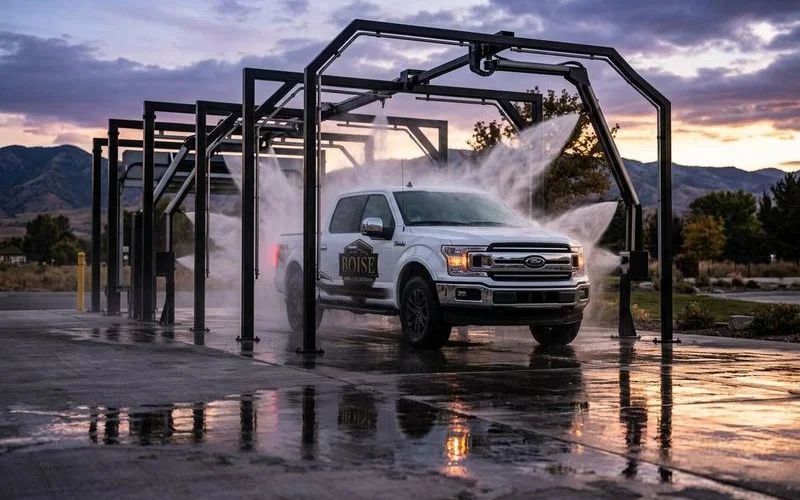
These facilities rely entirely on chemical reactions and high-pressure water. Sensors guide spray arms around the vehicle to blast away contaminants without any solid object touching the paint.
Our experience shows these are significantly safer for the physical structure of the clear coat. However, they struggle to remove the “traffic film,” a thin, static layer of road grime that usually requires agitation to lift.
Soft-Touch Washes
This hybrid method uses closed-cell foam or microfiber strips. These materials do not hold water or dirt as stubbornly as older bristle brushes.
We consider this the middle ground for automatic cleaning. The technology is designed to be gentler, utilizing materials like Neoglide, yet it still involves physical contact that carries inherent risks.
What the Evidence Shows
Brush-Style Washes and Swirl Marks
The correlation between friction washes and paint defects is well-documented in our industry. We have measured clear coat thickness on vehicles frequented by brush washes and compared them to hand-washed counterparts.
The rotating brushes act like fine sandpaper over time.
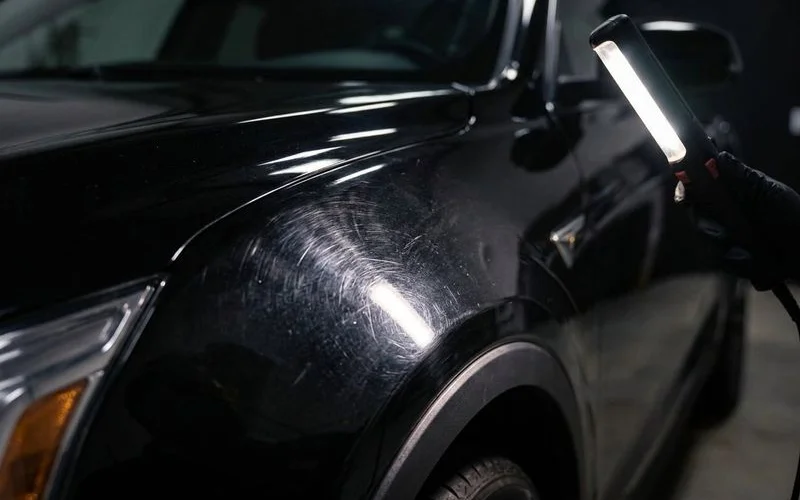
Our inspections reveal that the “brushes” often trap abrasive grit from the muddy truck that went through three minutes before you. This grit creates what we call “RIDS” (Random Isolated Deep Scratches) and widespread swirl marks.
The Cost of Convenience: Correcting these swirl marks requires a professional paint correction service. In the current US market, a multi-stage paint correction to fix tunnel wash damage typically costs between $600 and $1,500 depending on the vehicle size.
These micro-scratches scatter light. Instead of a deep, glossy reflection, the paint appears gray or hazy under direct sunlight.
The Recycled Water Factor
Water conservation laws require many commercial washes to recycle their water. We have seen reports indicating that up to 90% of wash water in some modern facilities is reclaimed.
Filtration systems are supposed to remove contaminants, but they are not perfect. In winter, recycled water often becomes a saline brine, loaded with dissolved road salts that filters cannot easily remove.
Our team advises caution here because spraying salty water into your undercarriage defeats the purpose of the wash. High-quality facilities use fresh water for the final rinse, but the wash cycle itself may still be abrasive.
Touchless Washes and Chemical Concerns
Touchless systems trade physical abrasion for chemical aggression. To clean a car without touching it, these systems must use high-pH (alkaline) and low-pH (acidic) solutions.
We frequently see plastic trim fading prematurely on vehicles that live in touchless bays. The harsh chemicals, often with a pH spread of 2 (acidic) to 12 (alkaline), can dry out rubber seals and dull plastic molding.
Protective Coating Impact: If you have invested in a wax or sealant, these chemicals are the enemy. A standard carnauba wax, which typically lasts 6-8 weeks, can be stripped away in a single pass by the high-alkaline detergents used in touchless presosaks.
Soft-Touch Washes
Soft-touch systems are a significant improvement over plastic bristles. The closed-cell foam material is designed to resist absorbing dirt and retains less water.
We still urge caution, however. Even the softest foam becomes abrasive if it slaps your paint at high speed while carrying a layer of grit.
Comparing the Options
We created this comparison to help you visualize the trade-offs between different wash methods based on current industry standards.
| Wash Type | Scratch Risk | Chemical Risk | Cleaning Power | Best For |
|---|---|---|---|---|
| Brush/Friction | High | Low | High | Muddy work trucks |
| Touchless | Low | High | Medium | Winter salt removal |
| Soft-Touch | Medium | Medium | High | Leased vehicles |
| Hand Wash | Lowest | Lowest | Highest | Luxury/Show vehicles |
Putting the Risk in Perspective
Damage is not inevitable for every car. We analyze several variables when advising clients on their wash habits.
Paint Color
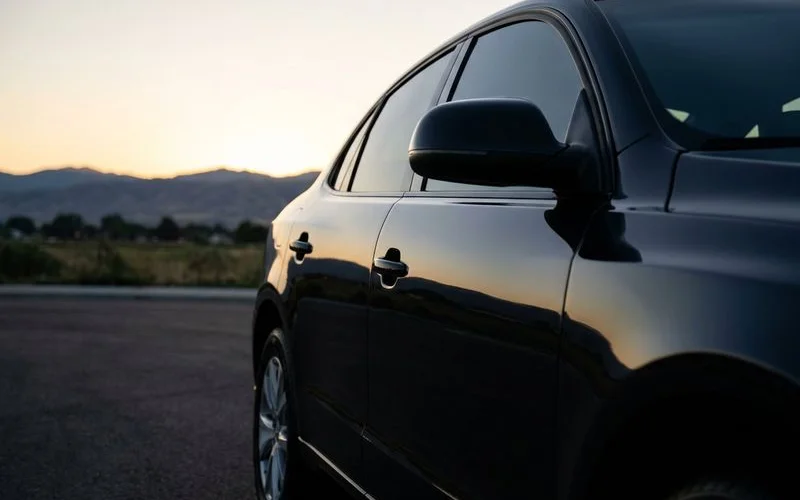
Dark colors are unforgiving canvases. “Phantom Black” or “Midnight Blue” paints act as mirrors for every imperfection.
We always warn owners of black vehicles that even minor swirl marks will be visible immediately. White, silver, or “champagne” paints hide these defects much better, offering a higher tolerance for automatic washing.
Existing Paint Condition
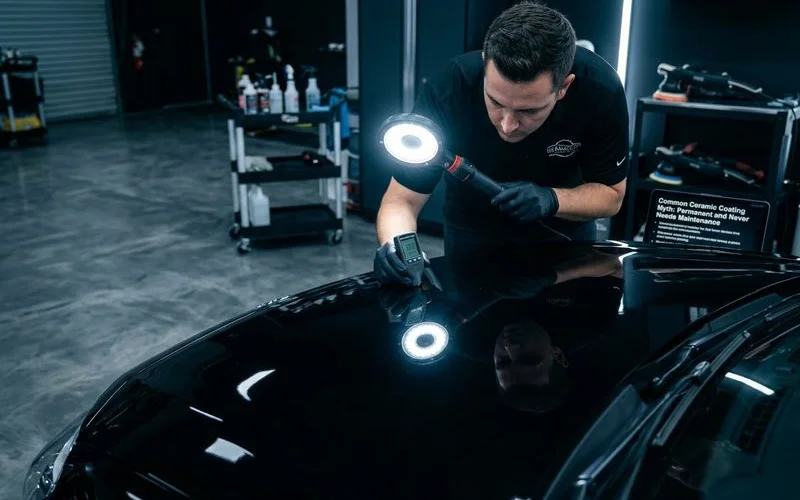
Clear coat health dictates vulnerability. Modern factory clear coats are roughly 1.5 to 2 mils thick.
To visualize this, imagine a standard Post-it note, which is about 3 mils thick. Your clear coat is thinner than that piece of paper.
Our technicians know that if your clear coat is already failing or thinning from age, high-pressure jets can actually peel it further. Healthy paint is more resilient.
Frequency
Dosage matters. A single trip through a soft-touch wash is unlikely to ruin your finish.
We see the real damage accumulate on vehicles that are washed automatically on a weekly basis. Over three years, that is 150 cycles of abrasion, which leaves a permanent mark.
Wash Quality
The maintenance schedule of the facility itself is a huge variable. A wash that replaces its foam strips quarterly and cleans its filters daily is safer than a neglected gas station wash.
We recommend looking at the equipment before you enter. If the brushes look tattered, dirty, or are visibly holding debris, drive away immediately.
When Automatic Car Washes Make Sense
Perfection is not always the goal. There are specific scenarios where we believe the automatic wash is the correct tool for the job.
- Road Salt Removal: Leaving corrosive magnesium chloride or salt on your car causes rust, which is far worse than micro-scratches.
- Fleet Maintenance: Work vehicles need to look respectable but do not require a mirror finish.
- Time Constraints: A 5-minute wash is better than a dirty car when you have a client meeting.
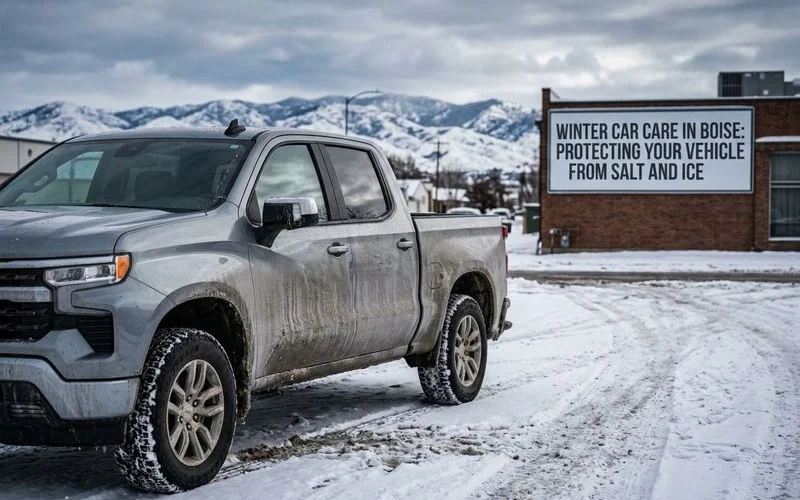
For drivers in our region, removing winter salt is a priority that overrides paint perfection. We would rather you risk a few swirls than let rust eat your rocker panels.
Better Alternatives
If you want to maintain the value and aesthetics of your vehicle, there are better ways to clean it. We recommend these methods for anyone with a ceramic coating or a high-value vehicle.
Proper Hand Washing
This is the gold standard. We teach the “Two-Bucket Method” to all our clients.
You use one bucket for soap and one for rinsing your mitt. By using a “Grit Guard” insert at the bottom of the rinse bucket, you trap dirt so it doesn’t get back onto your wash mitt.
Professional Mobile Wash
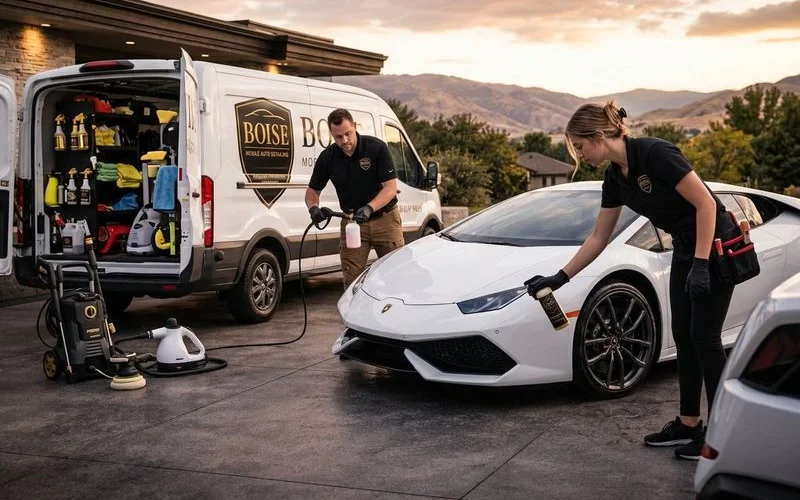
You can outsource the labor without sacrificing quality. Mobile detailers bring their own water and spot-free systems to your driveway.
We find this is the best balance for busy professionals. You get the safety of a hand wash without losing your Saturday morning.
Self-Serve Bays
The “coin-op” wash gives you control. You can use the high-pressure wand to knock off dirt without using the foamy brush that has been on the floor.
We suggest bringing your own bucket and mitt to the self-serve bay. Use their water pressure, but use your clean tools to touch the paint.
The Balanced Perspective
Automatic car washes are a tool of convenience. They serve a purpose for the majority of drivers who view their car as an appliance rather than an asset.
We know that for enthusiasts, the risk is simply too high. If you have invested $1,000 or more in a paint correction and ceramic coating, an automatic wash is a waste of that investment.
For everyone else, the choice comes down to priorities. You can accept some swirl marks in exchange for time, or you can invest the effort to keep the paint perfect.
Boise Mobile Auto Detailing Team
Professional detailing specialists serving Boise and the Treasure Valley.