Ceramic Coating vs Wax vs Sealant: Which Paint Protection Is Right for You?
A detailed comparison of ceramic coating, traditional wax, and paint sealant to help Boise vehicle owners choose the right level of paint protection for their needs and budget.
Understanding Your Paint Protection Options
You know how most people assume the “clear coat” on a new car acts like a suit of armor? We see this misconception almost every day in our shop. The reality is that factory clear coat is surprisingly fragile. It usually measures only about 1.5 to 2 mils thick. For context, that is thinner than a standard Post-it note.
Sun exposure, road debris, chemical contaminants, and simple friction gradually wear this thin layer down.
The question is not whether you need additional protection. The real question is which type fits your vehicle, your budget, and your willingness to maintain it.
In our experience serving the Boise area, vehicles face a brutal combination of intense UV exposure in summer and road salt in winter. This makes paint protection a necessity rather than a luxury if you care about preserving your vehicle’s value.
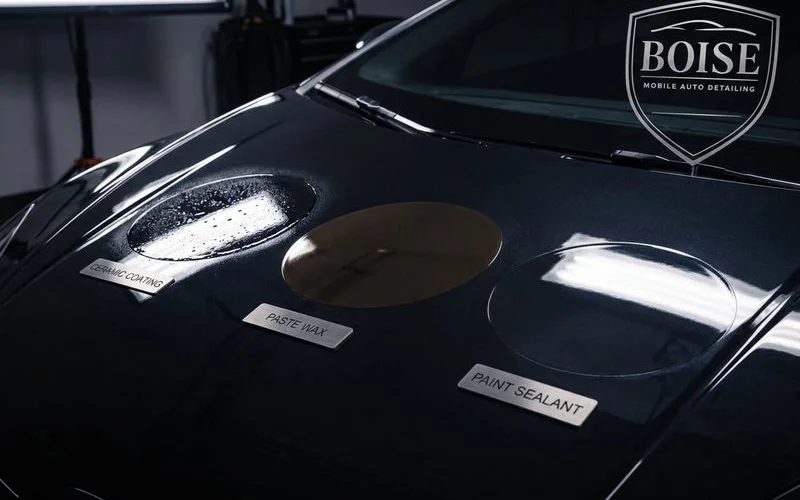
The three primary options are traditional carnauba wax, synthetic paint sealant, and ceramic coating. Each has distinct characteristics. None is universally “the best” without the right context.
Traditional Carnauba Wax
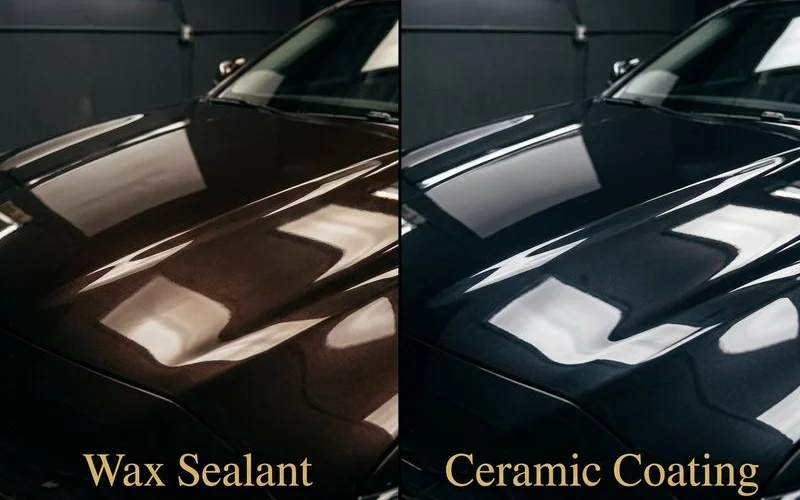
Carnauba wax has been the standard for automotive paint protection for decades. Derived from the leaves of the Copernicia prunifera palm tree in Brazil, it produces a warm, deep shine. Many enthusiasts still consider this the gold standard for visual appearance.
Strengths of Wax
The warm glow of a fresh carnauba wax application is difficult to replicate with synthetic products. We often recommend this for show cars because wax fills minor imperfections in the paint surface. This creates a smooth, rich appearance that looks especially striking on black or dark blue paint.
Application is straightforward and requires no special training or equipment.
Wax is also the most affordable option upfront. A high-quality paste or liquid wax costs relatively little. The application process typically takes only an hour or two for someone with basic detailing skills.
Limitations of Wax
Durability is where natural wax falls short. Natural carnauba wax has a melting point of approximately 180°F to 185°F.
In Boise’s summer heat, or anywhere in the southern US, surface temperatures on a dark hood can easily surpass 200°F. This heat causes the wax to destabilize and evaporate rapidly.
- Lifespan: In ideal conditions, it lasts four to eight weeks.
- Heat Resistance: Poor. Break down accelerates in high heat.
- Protection: Minimal against chemicals.
One issue we frequently see is “wax sweating.” This happens when the oils in the wax rise to the surface in the heat, creating a hazy or cloudy finish shortly after application.
Wax offers minimal chemical resistance against modern environmental hazards. Bird droppings, tree sap, and bug splatter will begin etching through a wax layer relatively quickly if not removed promptly. The hydrophobic (water-repelling) properties are moderate at best and diminish rapidly as the product wears away.
Synthetic Paint Sealant
Paint sealants are synthetic polymer-based products designed to bond to paint more effectively than natural wax. They represent a middle ground between traditional wax and ceramic coating in terms of both performance and cost.
Strengths of Sealant
Sealants typically last three to six months, significantly longer than wax. The synthetic polymers create a cross-linked barrier that resists UV exposure and chemical contaminants more effectively.
For Treasure Valley drivers who want better protection than wax without the commitment of ceramic coating, sealants offer a practical compromise.
The finish produced by a quality sealant tends to be glossy and reflective. Some detailers describe it as slightly “colder” or more “glassy” compared to the warm depth of carnauba wax. We find this is largely a matter of personal preference.
Sealants are also relatively easy to apply, though proper surface preparation is important for optimal bonding.
Limitations of Sealant
While more durable than wax, sealants still require reapplication several times per year. For vehicle owners who drive daily through varying conditions, maintaining consistent protection means scheduling regular reapplications.
The hydrophobic properties of sealants degrade over time. By the end of their effective lifespan, water behavior on the surface is noticeably different from a fresh application.
Ceramic Coating
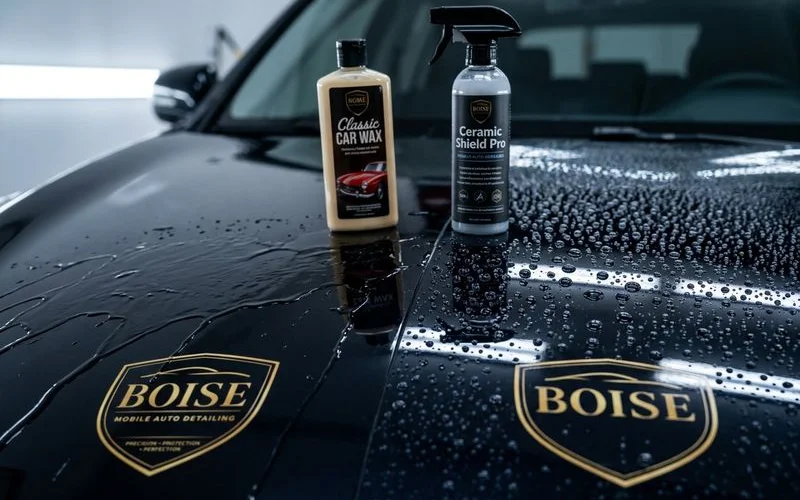
Ceramic coating represents the most advanced consumer-available paint protection technology. Professional-grade ceramic coatings use silicon dioxide (SiO2) or titanium dioxide (TiO2) to create a semi-permanent bond with the vehicle’s clear coat.
Strengths of Ceramic Coating
Durability is the defining advantage. A professionally applied ceramic coating lasts two to five years or longer. This depends on the product grade and how well you maintain it.
For the investment of a single application, you receive years of consistent protection. We have calculated that this often works out to be cost-competitive with repeated wax or sealant applications over the same period.
- Hardness: Most coatings offer a “9H” hardness on the pencil scale, providing resistance to light marring.
- Thickness: It adds a measurable layer (often 1-2 microns) of sacrificial protection.
- Hydrophobics: Water behavior on a coated surface remains impressive throughout the coating’s lifespan.
This superior hydrophobic effect means easier cleaning, less water spotting, and reduced contaminant adhesion. Ceramic coatings provide the strongest UV protection of the three options. This is particularly relevant for vehicles regularly exposed to Idaho’s high-altitude sun.
They also offer the best chemical resistance. This gives you more time to remove harmful contaminants like bird lime or road tar before they damage the underlying paint.
Limitations of Ceramic Coating
The upfront cost is significantly higher than wax or sealant. In the US market for 2025 and 2026, a high-quality professional ceramic coating package typically ranges from $900 to over $2,500.
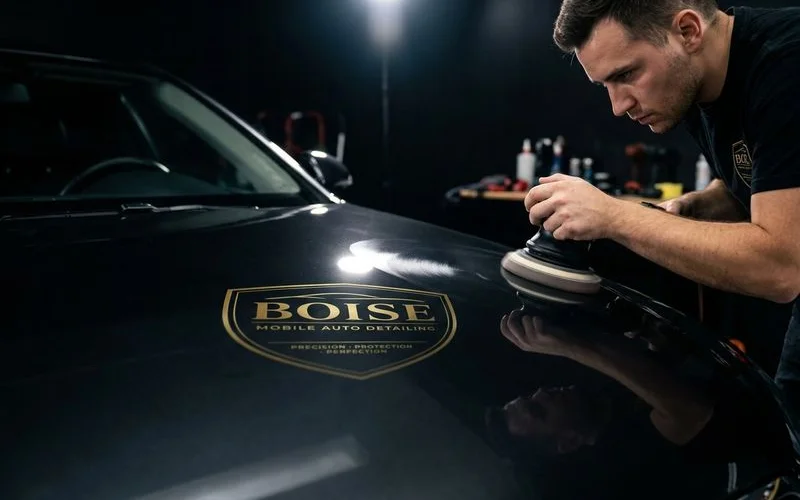
This price reflects the labor intensity. Professional application requires thorough paint preparation, including decontamination and paint correction (polishing), which adds to both the time and expense involved.
Ceramic coating is not a DIY-friendly process for most vehicle owners. Improper application can result in “high spots” (darker, hardened patches of excess coating), streaking, or uneven coverage that is difficult to correct without wet sanding.
The controlled environment and experience required for proper application make this a service best left to trained professionals.
A coated vehicle still requires regular washing. The coating reduces the effort involved but does not eliminate the need for maintenance.
Head-to-Head Comparison
We put these three options side-by-side to help you visualize the differences in performance and commitment.
| Feature | Wax | Sealant | Ceramic Coating |
|---|---|---|---|
| Durability | 4-8 Weeks | 3-6 Months | 2-5+ Years |
| Est. Cost (Pro) | $100 - $200 | $200 - $400 | $900 - $2,500+ |
| Heat Resistance | Low (Melts ~185°F) | Moderate | High |
| UV Protection | Minimal | Moderate | Strong |
| Chemical Resistance | Low | Moderate | High (pH 2-12) |
| Hydrophobics | Moderate (Fades fast) | Good | Excellent |
| Application | Easy (DIY Friendly) | Easy to Moderate | Professional Rec. |
Application Difficulty
- Wax: Easy (DIY-friendly)
- Sealant: Easy to moderate
- Ceramic Coating: Difficult (professional recommended)
Which Option Makes Sense for You
The right choice depends on your specific situation. If you enjoy the ritual of detailing your own vehicle every month and appreciate the warm aesthetic of natural wax, carnauba remains a valid choice.
If you want better protection with less frequent maintenance, a quality sealant is a reasonable step up.
For Boise vehicle owners who want the best available protection, ceramic coating delivers the strongest long-term value. We recommend this specifically for those who plan to keep their vehicle for several years and prefer to minimize ongoing maintenance effort. The upfront investment is higher.
The cumulative cost over the coating’s lifespan, however, is often comparable to regular wax or sealant applications.
A Note on Layering
Some vehicle owners ask about layering products, such as applying a sealant over a ceramic coating. In most cases, this is unnecessary and can actually interfere with the coating’s performance.
A properly applied ceramic coating does not benefit from additional product layers. The chemical structure of a coating is designed to shed dirt, which means a wax or sealant often struggles to bond to it anyway.
- Avoid: Applying paste wax over ceramic (it masks the superior hydrophobic properties).
- Consider: SiO2-infused spray toppers designed specifically for ceramic maintenance.
The best approach is to choose one primary protection method that matches your needs and commit to maintaining it properly. Consistent care with the right product will always outperform a more expensive product that is neglected.
Boise Mobile Auto Detailing Team
Professional detailing specialists serving Boise and the Treasure Valley.