5 Ceramic Coating Myths That Cost Vehicle Owners Money
Separating fact from fiction on ceramic coatings. These five common myths mislead Boise vehicle owners into making costly decisions about paint protection.
The Real Cost of Misinformation
We see the confusion on customers’ faces almost every day.
Vehicle owners walk into our shop expecting a force field around their car, or they stay away entirely because they think the technology is just expensive snake oil.
This disconnect between marketing claims and reality has a financial impact.
Buying a coating based on exaggerated promises leads to disappointment and wasted capital.
Ignoring the benefits because of skepticism means missing out on legitimate asset preservation.
Our team in the Treasure Valley encounters these myths regularly while consulting with drivers about paint protection.
We want to clear the air.
Addressing these misconceptions helps you make a financial decision based on data rather than internet rumors.
Here is the truth about what ceramic coating actually does for your vehicle.
Myth 1: Ceramic Coating Makes Your Car Scratch-Proof
This is the most expensive misunderstanding in the auto care industry.
Many marketing campaigns imply that a coated vehicle becomes impervious to physical damage.
We need to be very clear about the physics involved here.
No liquid polymer product on the US market makes a vehicle scratch-proof.
The coating adds a measurable layer of hardness to the surface, but it has limits.
The Physics of Hardness
You have likely heard the term “9H” used in marketing materials.
This refers to the Pencil Hardness Scale, not the Mohs Scale of Mineral Hardness used in geology.
A 9H pencil is hard, but it is still softer than many common abrasive materials found on the road.
Comparing Surface Hardness:
| Material | Hardness Scale (Approximate) | Impact |
|---|---|---|
| Factory Clear Coat | 2H - 4H (Pencil) | Scratches easily from dirty wash mitts |
| Ceramic Coating | 9H - 10H (Pencil) | Resists light marring and swirl marks |
| Sand / Road Dust (Silica) | 7 (Mohs) / >10H (Pencil) | Will scratch coating if wiped dry |
| Steel (Keys) | 5-6.5 (Mohs) | Will scratch coating with pressure |
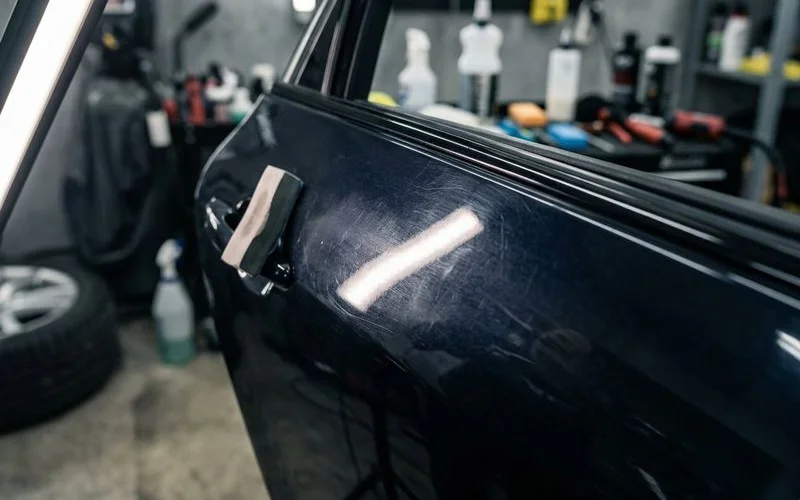
Ceramic coating excels at preventing “marring.”
These are the fine, spiderweb-like swirls caused by washing or drying with a towel that isn’t perfectly clean.
It preserves the factory clear coat by acting as a sacrificial layer against these minor abrasions.
Protection against rock chips or key scratches requires Paint Protection Film (PPF), which is a thick urethane layer, not a liquid coating.
Myth 2: You Never Need to Wash a Coated Vehicle
Marketing videos often show mud sliding right off a coated hood with just a splash of water.
These demonstrations create the false impression that the car cleans itself.
We have to correct this expectation immediately to protect your investment.
Ceramic coatings are hydrophobic, meaning they shed water and loose dirt quickly, but they are not self-maintaining.
The Science of Contamination
A coated vehicle still accumulates traffic film, iron fallout from brake dust, and organic residue like bug splatter.
These contaminants settle on top of the coating.
If you fail to wash the vehicle, this layer of grime clogs the microscopic pores of the ceramic layer.
The hydrophobic properties will fail if the surface is masked by dirt.
We recommend a specific maintenance routine to keep the coating active:
- Frequency: Wash every two weeks.
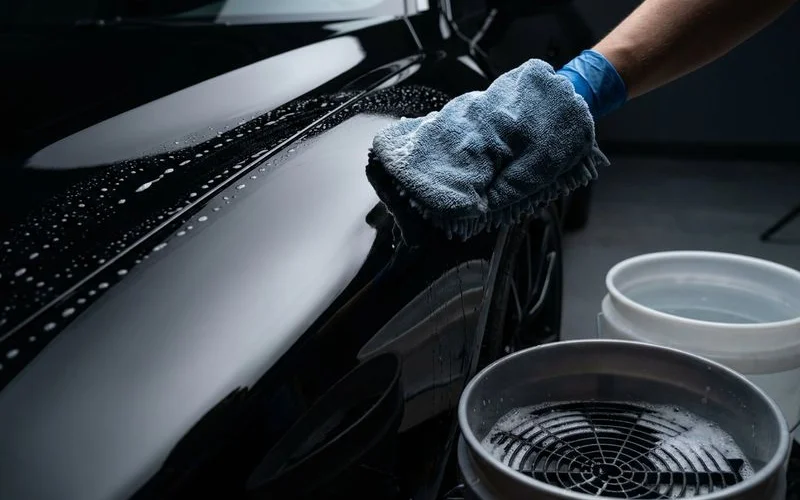
- Method: Use the “Two-Bucket Method” (one for soap, one for rinse) to avoid rubbing grit back into the paint.
- Chemistry: Use a pH-neutral automotive shampoo without added waxes (like CarPro Reset or Gtechniq G-Wash).
- Seasonal Care: In regions with winter road salts, like Idaho, frequent rinsing is non-negotiable to prevent chemical buildup.
Neglecting this routine turns a premium coating into a standard dirty surface.
Myth 3: All Ceramic Coatings Are the Same
Treating all ceramic products as equal is like comparing a bicycle to a motorcycle because they both have two wheels.
The market is flooded with products ranging from $20 spray bottles to $1,500 professional service packages.
We find that the primary difference lies in the chemistry and the concentration of active ingredients.
Solids Content and Durability
The “active ingredient” in most coatings is Silicon Dioxide (SiO2).
Professional-grade coatings and consumer sprays differ drastically in how much SiO2 they actually contain.
Product Class Comparison:
| Product Type | SiO2 Solids Content | Durability Estimate | Best Use Case |
|---|---|---|---|
| Consumer Spray | 5% - 15% | 1 - 3 Months | Quick shine, drying aid |
| Consumer Bottle | 30% - 50% | 1 - 2 Years | DIY enthusiasts |
| Professional Grade | >80% - 90% | 5+ Years | Long-term asset protection |
Consumer sprays are mostly water and solvents with a small amount of protection.
Professional systems from manufacturers like Ceramic Pro, Gtechniq, or IGL Coatings use high-solid formulas that require specific curing lamps and temperature controls.
Our region experiences temperature swings from single digits to over 100°F.
A high-solid professional coating provides the thermal resistance and chemical stability needed to survive these extremes.
Cheaper alternatives simply evaporate or break down under that kind of environmental stress.
Myth 4: Ceramic Coating Eliminates the Need for Paint Correction
This is a common hope for owners looking to save money on the front end.
Many assume the liquid coating will fill in scratches and make the paint look new again.
The reality is actually the opposite.
The “Lens Effect”
Ceramic coating is optically clear and has a high refractive index.
It functions like a magnifying glass placed over your clear coat.
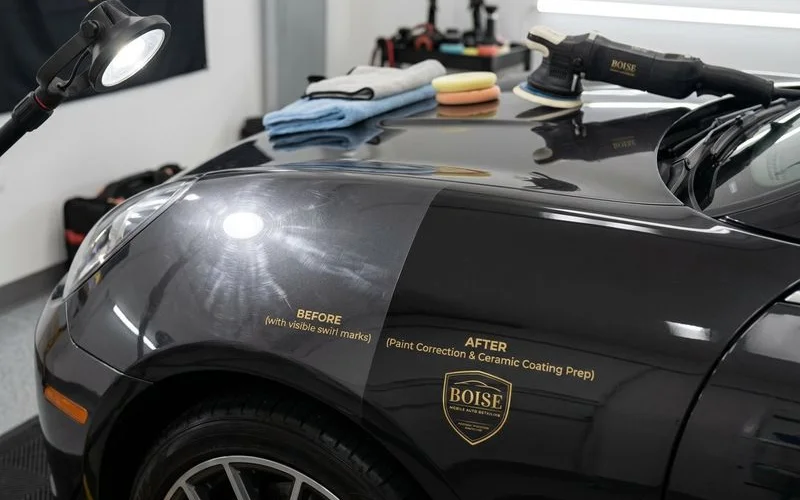
Applying coating over swirled or scratched paint locks those defects in and often makes them pop visually.
We view paint correction as the foundation of the entire process.
- Decontamination: We remove embedded iron and tar that washing misses.
- Polishing: We use machine polishers to level the clear coat, removing the peaks and valleys that cause scratches.
- Bonding: Coating adheres best to clinically clean, leveled paint.
Skipping this step results in a shiny vehicle that highlights every flaw.
You cannot polish the scratches out later without abrading and removing the expensive coating you just paid for.
Myth 5: DIY Ceramic Coating Delivers the Same Results as Professional Application
The internet is full of videos claiming you can get professional results in your driveway for a fraction of the cost.
We support DIY enthusiasts, but you must understand the risks involved with permanent chemicals.
Professional application is about environmental control as much as it is about the product itself.
The Variables That Matter
A professional coating requires a stable environment to cure properly.
Most manufacturers specify an application temperature between 60°F and 75°F with low humidity.
Applying these products in a dusty driveway or a hot garage often leads to failure.
Common DIY Risks:
- High Spots: If the coating is not leveled within minutes, it hardens into dark, uneven patches.
- Premature Curing: Hot panels cause the solvents to flash too fast, leading to streaking.
- Moisture Damage: Rain or dew within the first 24 hours can ruin the finish before it cures.
Fixing a “high spot” after it cures usually requires wet sanding and compounding.
We have had to bill customers for hours of labor to fix a botched DIY job that cost more to repair than a professional installation would have cost originally.
Making an Informed Decision
Ceramic coating is a powerful tool for paint preservation when you strip away the hype.
It offers UV protection, intense gloss, and ease of cleaning that wax cannot match.
We believe it is the best long-term solution for vehicle owners in the Treasure Valley who want to keep their cars looking new.
The key is to align your expectations with the data.
You should look for a certified installer who explains the maintenance requirements clearly rather than promising a magic shield.
Ask to see their portfolio and the specific warranty terms of the product they install.
A transparent conversation is the best way to ensure you get exactly what you pay for.
Boise Mobile Auto Detailing Team
Professional detailing specialists serving Boise and the Treasure Valley.